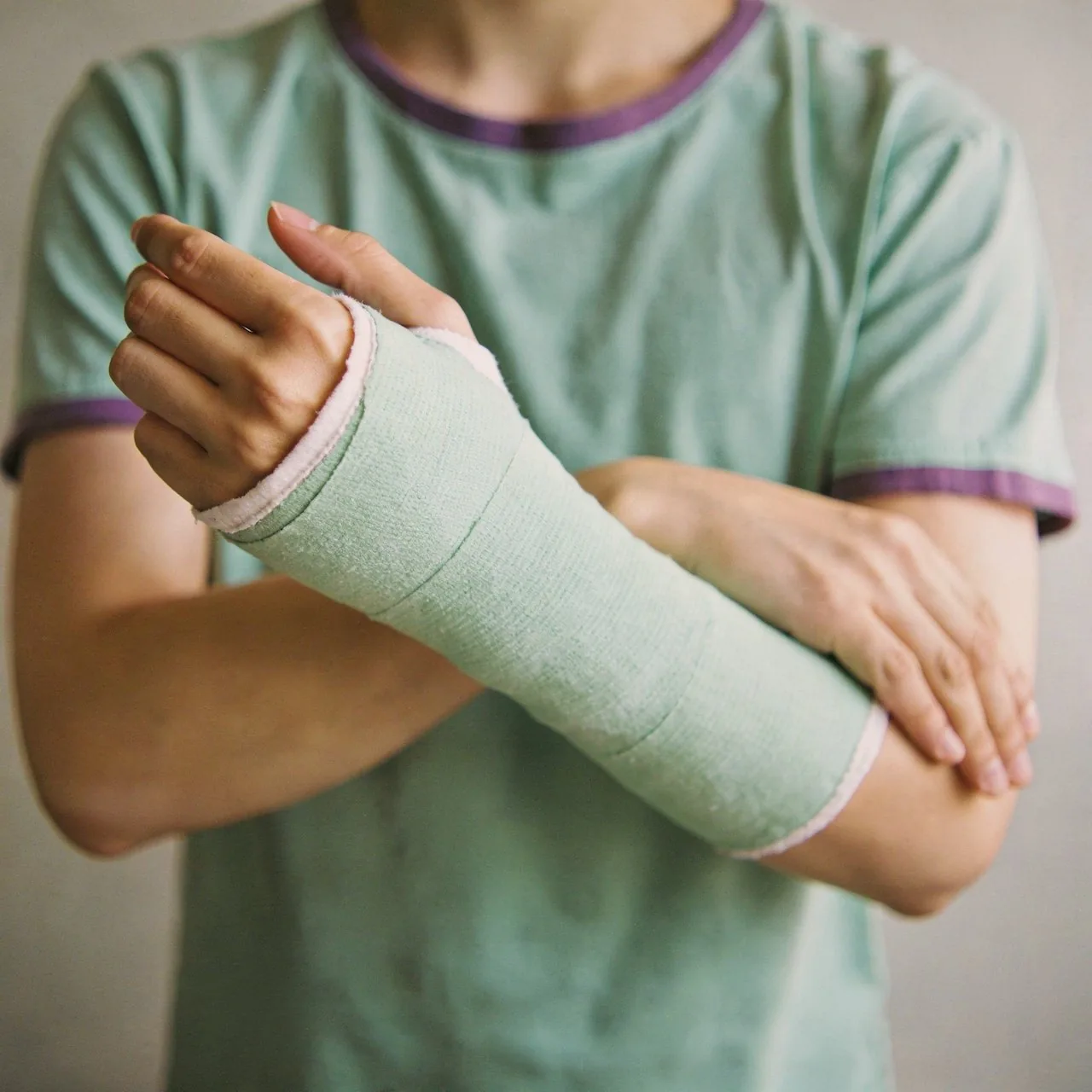
Torsten Liem, CEO of Osteopathie Schule Deutschland, is not only an expert in this field but also founded the Osteopathic Research Institute as well as an osteopathic teaching clinic and developed psychosomatic osteopathy. He treats a radial head fracture using a structural, neurophysiological, functional, and nutritional therapeutic approach. His phase-adapted treatment plan is as follows:
Acute Phase (Days 0–7)
In the first days following the injury, Liem works primarily with gentle exercises that do not stress the injured area. He mobilizes the patient’s thorax to support breathing and regulates the diaphragm. He also ensures balance in the lumbosacral and pelvic system. His goal is to promote circulation of blood flow, muscles, and the nervous system. Through gentle lymphatic and venous techniques, he helps reduce fluid retention and releases tense muscles and fascia away from the fracture site—particularly in the lumbar spine, pelvis, and hip region. From the third day after the injury, the osteopath introduces strength training. However, this has nothing to do with bodybuilding. The fracture should remain completely unloaded. Liem trains his patients’ legs and the contralateral upper extremity to reduce inflammatory responses and muscle atrophy.
Repair Phase (Weeks 2–4)
In the early repair phase, the expert employs measures to regulate the body and organize tissue away from the fracture site. He works with General Osteopathic Treatment, gentle lymphatic treatments around the fracture, as well as strain/counterstrain, myofascial, and ligamentous approaches away from the fracture. This supports the reduction of swelling, alleviates pain, and normalizes tensions. He also performs mapping of involved structures to prepare for functional reintegration. He continues to avoid direct techniques at the fracture site.
Consolidation Phase (from Week 5–6, after medical clearance)
In the consolidation phase, treatment can finally be expanded step by step. In addition to early functional post-treatment, Liem now also employs local osteopathic techniques at the fracture site (see post-treatment). This is important not only biomechanically but also because the periosteum is highly innervated, and a possible reduction in mapping in the sensorimotor homunculus as well as interoceptively for the site should be restored. Furthermore, dosed local myofascial approaches, Balanced Ligamentous Tension, and strain/counterstrain are performed to resolve associated muscle, tendon, and ligament dysfunctions and ensure their mapping. He also practices passive repetitions of injury-related movements with the patients and gradually increases strength training to restore load capacity, function, and tissue integration.
Nutritional Therapeutic Support
Additionally, from the first day, Liem recommends phase-adapted nutritional therapeutic support with a protein intake of at least 1.6–2.0 g per kilogram of body weight. From the second day, L-lysine is added (initially 1 g twice daily, in the callus and consolidation phase 1.5 g twice daily). From the fifth day, 1–2 g of EPA+DHA omega-3 fatty acids should be taken daily.
Osteopathic Post-Treatment
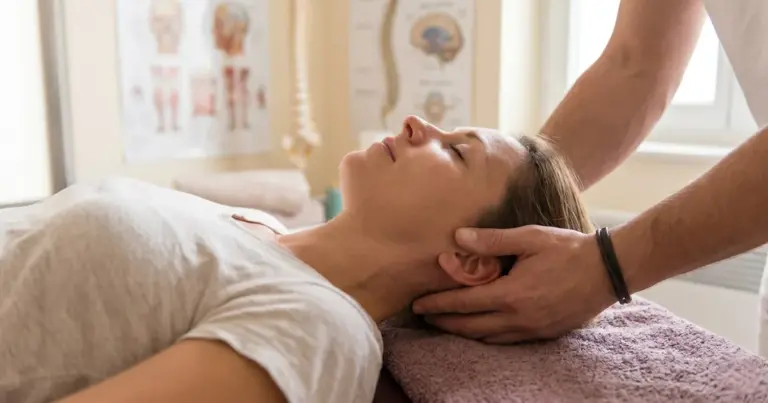
However, osteopathy does not abandon patients with long-standing pain. Torsten Liem recommends a systematic approach to treating chronic pain following injuries. It is based on distinguishing between peripheral and central pain processes and restoring the functional integration of all associated body systems as well as sensory perception. For this purpose, the patient should passively repeat the original injury movement. Liem tests spinal segments associated with it and treats them as needed. Peripheral sensitization is differentiated, nociceptors are deactivated, and segmental inhibition is tested. The osteopath also examines possible central sensitization. If necessary, targeted deconditioning of pain memory is performed. Liem also treats myofascial trigger points and corrects balance problems. The bone at the old fracture site is also tested locally and, if necessary, globally. Bone/periosteal treatment is performed using compression, decompression, point-specific resistance work, and lateral flexion, among other techniques. Subsequently, everything is integrated within the framework of psychosomatic osteopathy through interoceptive procedures, cortical activation, and bilateral stimulation, for example via cranial nerves.
Conclusion
A fracture is only truly healed when proper follow-up care has taken place. “If the fracture remains untreated, the pain can intensify and generalize with increasing age,” warns Torsten Liem.
Source: Hörl, Annalena: Radiusinaktiv – Bruch des Speichenkopfes ganzheitlich behandelt. Naturheilpraxis 03/2026, pp. 12–16 (Richard Pflaum Verlag).