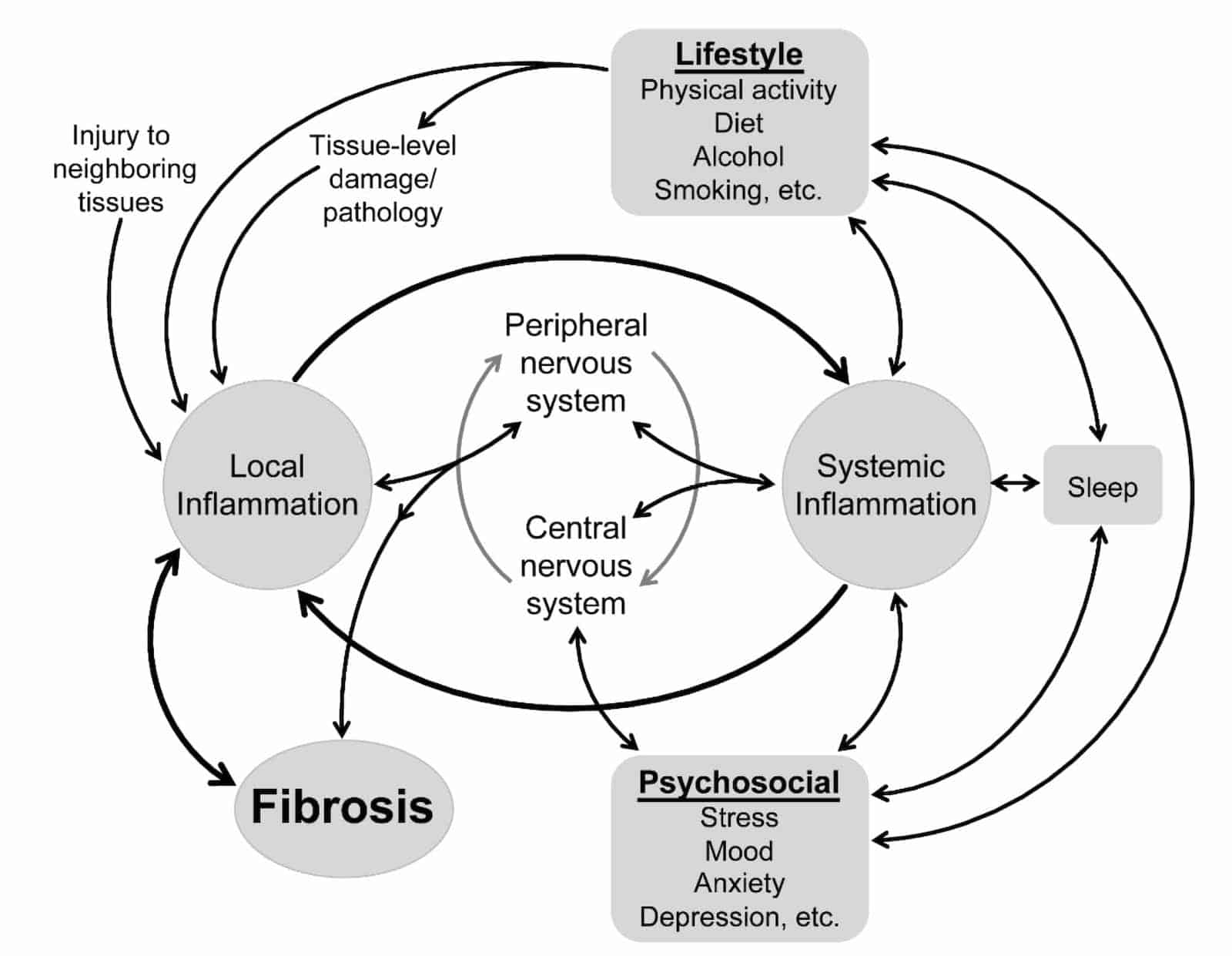
Biological, psychological, social, and often lifestyle-related factors underlie musculoskeletal disorders. The isolated consideration of these influences is likely responsible for a large part of the disappointing treatment effects. A networked perspective is necessary to understand the complexity of these conditions. Klyne et al. (2021) present a hypothesis aimed at providing a basis for understanding the interaction and integration between these domains. In doing so, psychological and lifestyle factors are discussed in terms of their effects at the tissue level (e.g., dysregulation/accumulation of connective tissue). Musculoskeletal disorders are specifically attributed to molecular mechanisms of systemic and local inflammatory processes. Perspectives on the biology and pathology of connective tissue (fibrosis), the role of inflammation at the local level (tissue level), and how these inflammations are shaped by systemic inflammation are discussed, particularly with regard to psychological and lifestyle factors through their influence on systemic inflammation. It may not be truly surprising that sleep disorders, physical inactivity, alcohol consumption, pro-inflammatory diet, and smoking are listed as significant lifestyle factors. Klyne DM, Barbe MF, James G, Hodges PW. Does the Interaction between Local and Systemic Inflammation Provide a Link from Psychology and Lifestyle to Tissue Health in Musculoskeletal Conditions? Int J Mol Sci. 2021 Jul 7;22(14):7299. https://pubmed.ncbi.nlm.nih.gov/34298917/






Radial Head Fracture: Osteopathic Treatment Step by Step
Torsten Liem, CEO of Osteopathie Schule Deutschland, is not only an expert in this field but also founded the Osteopathic Research Institute as well as