Tips for Healthy Child-Appropriate Nutrition
Children’s eating habits are largely shaped by the family environment. When children are transitioning to solid foods around their second year of life, ideally offer them eggs, poultry, seafood, as well as vegetables and fruit.
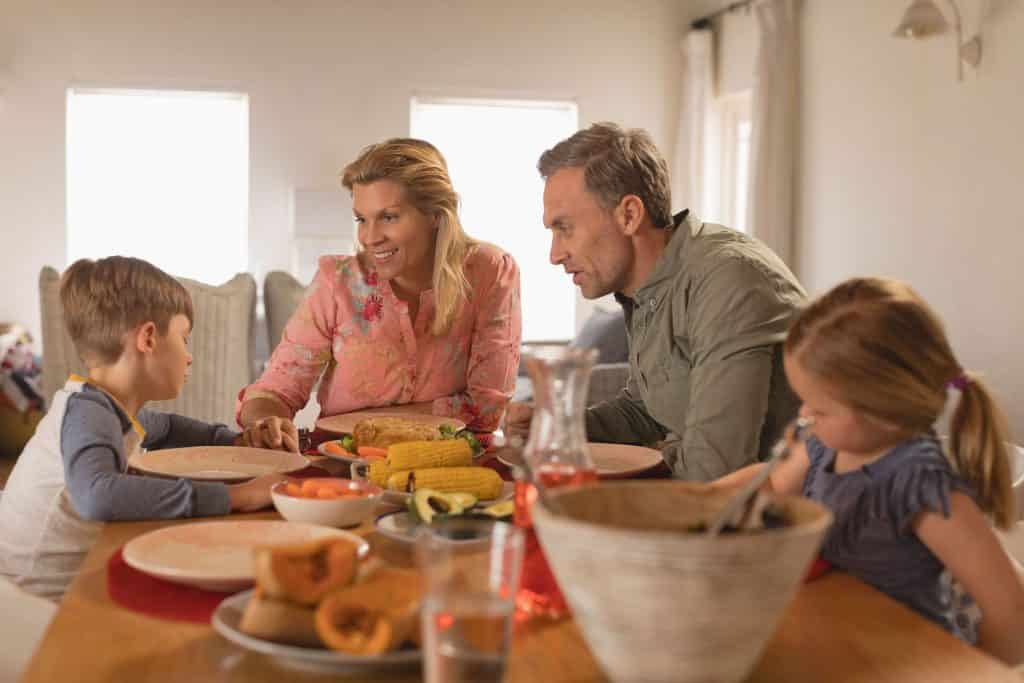
Children orient themselves to the behavior of their parents, siblings, and later to other people in their immediate environment (e.g., at daycare). The experiences and observations in the child’s immediate environment thus form the essential foundation for eating behavior. Therefore, it is important to lead by example! When you as parents bring joy and interest to meal planning, the foundation for child-appropriate nutritional education is laid.
Between the ages of 2 and 6, children develop a physiological food neophobia, i.e., a fear of trying new foods. Ideally, by then children will have become familiar with healthy foods such as vegetables, fish, eggs, and poultry.
- When children show disgust for a food, they should never be forced to eat it. To familiarize your child with new foods, you should therefore never apply pressure. This promotes the development of food intolerances. Instead, it is initially important that the child sees you eating it regularly.
- Paradoxical behavior: Subsequently, you can show your child that you are pleased they are not eating a particular food they reject, so that you can eat more of it yourself.
- The plate does not have to be finished. Do not exert pressure to finish the entire plate.
- What constitutes healthy eating behavior in children:
- learning to eat independently
- learning table and eating manners
- acquiring eating rules and eating rituals
- desire to try new foods
- having a say in the selection and preparation of foods
- taking co-responsibility for their own nutrition
- Curiosity: With the transition to toddlerhood, the child becomes a permanent member at the family table and thereby continuously learns about new foods. Use your child’s curiosity and offer new flavors and textures as frequently as possible. The richer the food variety, the better. It is advisable to offer disliked foods repeatedly, as taste senses develop at different rates. The perception of bitterness develops last, which is why it may take time for your child to become accustomed to vegetables such as chicory.
- Active participation in cooking: It is advisable to involve the child in the preparation process as early as possible. Take advantage of the fact that children are curious and want to do everything themselves even at an early age by allowing your child smaller kitchen tasks. Most children particularly enjoy this, and it also increases the likelihood that disliked foods will be tried and accepted. Here are a few small tasks for the beginning:
- Setting and decorating the table
- selecting (healthy) foods while shopping
- washing vegetables, tearing lettuce, or stirring yogurt with fruit
- clearing dishes
One grows with their tasks, so the assigned tasks should be adapted appropriately to age over time. A school-age child can already help with shopping and cooking under your guidance.
- Fixed meal times and rituals: Fixed meal times and rituals are part of healthy eating behavior, even in adulthood. Through a shared breakfast (ideally without time pressure) or an extensive dinner, you can help your child establish regular meals.
- Self-service: Offer foods for self-service so that your child can determine how much they want to eat. As role models, parents and siblings should also handle it this way. This helps you avoid potential discussions about having to finish the plate.
- Raising children and teaching them healthy eating behavior can be exhausting. Nevertheless, refrain from putting your child under pressure or even punishing them. Regular use of sweets as a reward is also not advisable.
- Avoid having sodas, sweetened teas, or fruit juices in the house.
- Do not use the word “healthy” too often in connection with foods, otherwise the child may get the impression that “healthy” means foods that do not taste good.
In summary, children adopt healthy or unhealthy eating behavior through observation and imitation. Therefore, it is also worthwhile to continuously expand your own culinary horizons and try new, delicious, and healthy dishes.