The classic treatment for gastroesophageal reflux disease is medication-based, using proton pump inhibitors. The response rate to this treatment option is usually low, and long-term use can lead to undesirable side effects, such as an increased risk of pulmonary infections, vitamin B12 deficiency, osteoporosis, and fractures. A recent study investigated the effectiveness of osteopathic treatment for gastroesophageal reflux disease, and its results are clearly summarized in this article. Just 4 osteopathic treatments within 8 weeks led to a significant improvement in the subjective quality of life of the patients. The most common osteopathic dysfunctions that responded best to treatment were localized in the sacrum, the C3-5, C0/1, T1/T2 regions, the diaphragm, and the pyloric region. For those interested in the exact data: Methods: The gold standard, a randomized controlled trial, was chosen as the study design. 70 patients were randomized into a treatment group with OMT and a control group without treatment. Gastrointestinal symptoms, measured using the Reflux Disease Questionnaire (RDQ), were defined as the primary outcome, and quality of life, measured with the Quality of Life in Reflux and Dyspepsia Questionnaire (QUOLRAD), medication consumption, and other osteopathic dysfunctions were assessed as secondary outcomes. Results: In the intervention group, gastrointestinal symptoms (RDQ mean scores) tended to decrease; however, due to a large number of incorrectly completed questionnaires, no conclusive statement on the efficacy of the primary outcome parameter could be made. Nevertheless, statistically significant differences were observed in quality of life (QUOLRAD mean scores). The overall QUOLRAD score of the osteopathic intervention group improved by 0.64 points after 8 weeks, and these changes remained stable after an additional 20 weeks, while the score in the control group did not change. Furthermore, the consumption of proton pump inhibitors significantly decreased in the intervention group. Conclusion: The study results demonstrate the sustainable potential of OMT in the treatment of individuals with gastroesophageal reflux disease, thus representing a safe and effective complementary treatment option to standard drug therapy. The authors also noted that further studies should include longer follow-up periods and measurements of data on global changes due to OMT in gastroesophageal reflux disease (Lynen et al. 2022). Literature Lynen A, Schömitz M, Vahle M, et al. Osteopathic treatment in addition to standard care in patients with Gastroesophageal Reflux Disease (GERD) – A pragmatic randomized controlled trial. J Bodyw Mov Ther. 2022;29:223-231
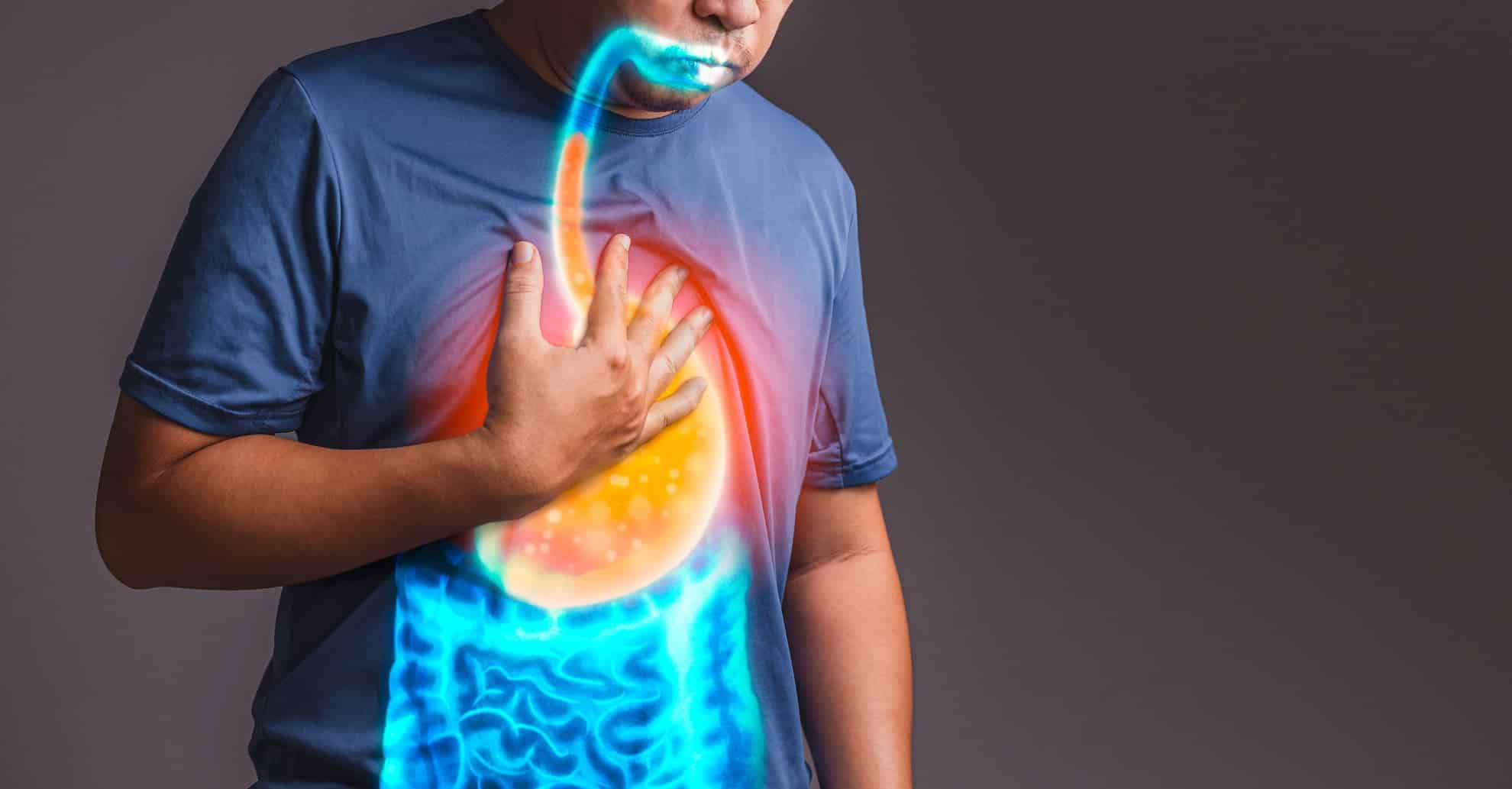
Osteopathic manipulative therapy (OMT) is effective in gastroesophageal reflux disease.
The classic treatment for gastroesophageal reflux disease is medication-based, using proton pump inhibitors. The response rate to this treatment option is usually low, and long-term use can lead to undesirable side effects, such as an increased risk of pulmonary infections, vitamin B12 deficiency, osteoporosis, and fractures. A recent study investigated the effectiveness of osteopathic treatment for gastroesophageal reflux disease, and its results are clearly summarized in this article. Just 4 osteopathic treatments within 8 weeks led to a significant improvement in the subjective quality of life of the patients. The most common osteopathic dysfunctions that responded best to treatment were localized in the sacrum, the C3-5, C0/1, T1/T2 regions, the diaphragm, and the pyloric region. For those interested in the exact data: Methods: The gold standard, a randomized controlled trial, was chosen as the study design. 70 patients were randomized into a treatment group with OMT and a control group without treatment. Gastrointestinal symptoms, measured using the Reflux Disease Questionnaire (RDQ), were defined as the primary outcome, and quality of life, measured with the Quality of Life in Reflux and Dyspepsia Questionnaire (QUOLRAD), medication consumption, and other osteopathic dysfunctions were assessed as secondary outcomes. Results: In the intervention group, gastrointestinal symptoms (RDQ mean scores) tended to decrease; however, due to a large number of incorrectly completed questionnaires, no conclusive statement on the efficacy of the primary outcome parameter could be made. Nevertheless, statistically significant differences were observed in quality of life (QUOLRAD mean scores). The overall QUOLRAD score of the osteopathic intervention group improved by 0.64 points after 8 weeks, and these changes remained stable after an additional 20 weeks, while the score in the control group did not change. Furthermore, the consumption of proton pump inhibitors significantly decreased in the intervention group. Conclusion: The study results demonstrate the sustainable potential of OMT in the treatment of individuals with gastroesophageal reflux disease, thus representing a safe and effective complementary treatment option to standard drug therapy. The authors also noted that further studies should include longer follow-up periods and measurements of data on global changes due to OMT in gastroesophageal reflux disease (Lynen et al. 2022). Literature Lynen A, Schömitz M, Vahle M, et al. Osteopathic treatment in addition to standard care in patients with Gastroesophageal Reflux Disease (GERD) – A pragmatic randomized controlled trial. J Bodyw Mov Ther. 2022;29:223-231