“Our wholeness, in its tangible part, is the body, with all the processes and instances it contains. We live in it as in an enchanted castle that could have sprung from the oppressive imagination of Kubin or Kafka. We are indeed masters—but what obeys us? We sit in the chamber of our consciousness; through its windows we perceive the world outside, through its door the interior of the castle approaches us. We give commands and are served, but often by strange faces and in a bewildering, confused manner. We are brought what we do not wish, and what we demand we often do not receive, or receive late and inconveniently. The house is enchanted; we do not know our way around its convoluted vastness. Often it seems the serving spirits have conspired against us, have flown away or are celebrating feasts of their own. We are not safe from uprisings. There are hauntings, noises penetrate the wall—are spirits rumbling? Are there guests next door whom we did not invite? Is it the servants whispering and quarreling? How do these people actually live, and how many are there?” Heinrich Zimmer 1973
One of the central questions that interests me concerns the influences, interactions, and guiding principles that determine morphological dynamics and their application in osteopathic practice.
Human beings are more than the sum of soma and psyche; they form an inseparable psychosomatic unity. The tissue, as the external, is present all the way up to the highest internal, i.e., the highest consciousness. The increasing complexity of material form that occurs in evolution is accompanied by an increasing refinement of energies and internal awareness: the more complex the gross material forms, the more subtle the accompanying energy patterns/fields and the greater the internal awareness. In this phylogenetic and ontogenetic dynamic, matter (including the energy fields bound to matter) is consistently present as the externally objective or the external form up to the highest internal subjective, the highest possible consciousness. The objective reality of tissue structures and their associated energies is contrasted with the subjective reality of internal consciousness, embedded in interobjective (sociobiological environment) and intersubjective (culture/family) realities.
However, the mistake must not be made of reducing internal experiences to the energetic level or the physical. To adequately treat the “wholeness” of the patient, it is not sufficient to treat only the tissue correlate. Equally necessary is the ability to experience and take into account the internal consciousness component that arises. The degree of consciousness or awareness of the osteopath toward his or her own sensorimotor, interoceptive, vital, neurovegetative, emotional, mental, spiritual internalities and those of his or her patients determines the extent to which he or she is able to recognize tissue-energy-consciousness patterns in the patient or to connect and consider tissue and energetic patterns with the internal dimensions. The more capable he or she is of doing so, the greater the likelihood that the treatment will not evoke new dissociative patterns. Corresponding differentiations of osteopathic perspectives and consideration of the developing structure-function interrelationships offer solid methods for treating tissue dysfunction complexes—as well as for the associated subjective consciousness patterns.
Methods, approaches, techniques should be regarded as possibilities at best. They are by no means to be understood as a dogmatic set of rules. Every osteopath is invited to reconsider them in the clinical context and to differentiate or integrate these options.
Neither exclusively objective, rational approaches in osteopathy nor religiously colored visionary approaches are capable of meeting the demands that the present places on an osteopathic treatment method.
Healing practices exist or develop not in a vacuum, but arise in a particular historical, cultural, and social environment. This formative environment, however, is usually taken so much for granted that the underlying belief models generally remain unconscious. Those who understand osteopathy exclusively as a kind of revealed doctrine run the risk of negating the cultural, social, and scientific-historical conditions in the developmental process of osteopathy (or osteopathic terminology such as “somatic dysfunction”) and thereby closing themselves off to evolutionary potentials. For a mature understanding of osteopathic diagnostic and treatment procedures, insights into the historically changing paradigms in healing and about the body are absolutely necessary, among other things. Even though, phylogenetically speaking, human beings have already reached a great depth compared to other living beings, each individual human being nevertheless begins ontogenetically, so to speak, at zero and must pass through all corresponding levels in the course of his or her development. This also means, however, that something can go wrong at each developmental stage and differentiation and transcendence may not occur at all or only incompletely. Here osteopathy can provide support by promoting the dissolution of conditioned limitations and orientation toward a deeper state of equilibrium.
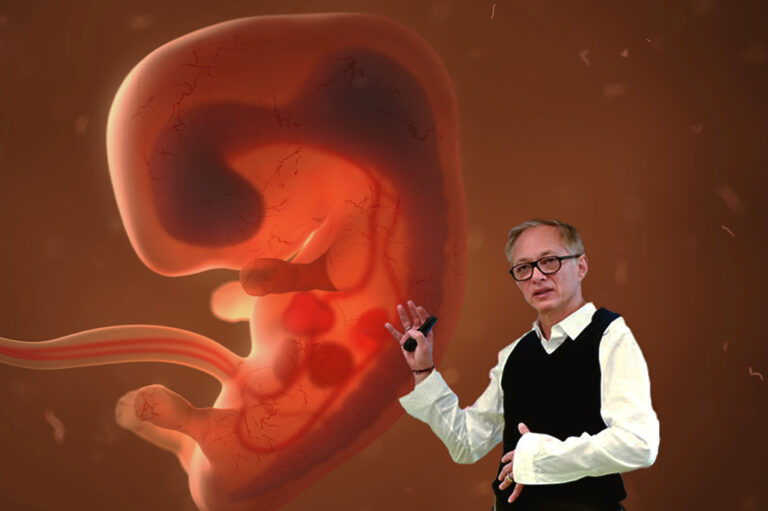
Healing therefore does not necessarily mean that we want to regain a previous state of health. By acknowledging a developmental process that perhaps began ontologically with fertilization but is certainly not completed by adolescence, healing takes on a completely different, far more extensive meaning. It releases the therapist from a restrictive therapeutic edifice that exhausts itself in the exclusive search for a health lost in time. The expansion of the potential for therapeutic interaction arises through understanding the inherent relationship between health and developing integrations of higher order in the human being.
Insights into biological rhythms and developmental dynamics deepen the understanding of homeostasis and health status and lead to a more adequate and specific treatment of the patient.
To gain deeper knowledge about the therapeutic process, the osteopath can examine objective and subjective factors of developmental dynamics and the physical, biological, emotional, mental, and spiritual levels in therapeutic interaction.
The presentation of these factors clearly shows how many dynamics and levels of reality are involved in treatment. If we take only one of the levels and attempt to generalize in therapeutic interaction on this basis, we inevitably limit the therapeutic potential. If, on the other hand, we consider the various levels, we are able to offer a “more holistic” osteopathic treatment.
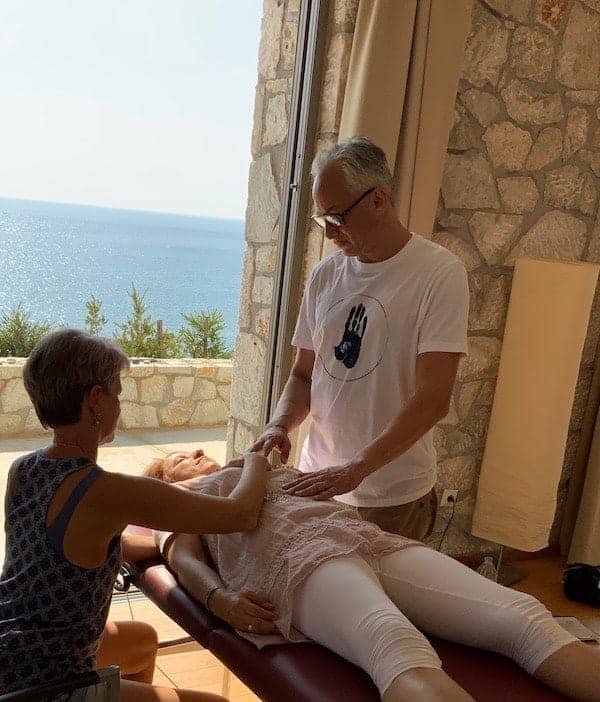
Therapeutic interaction can only be learned step by step. The basic prerequisites for this are sound knowledge of each tissue, its structural-functional unity and the diverse interactions of tissues and organ systems with one another, as well as the palpatory approach to the respective tissue and to the globality of tissue dynamics. These learning stages cannot be bypassed. These learning steps cannot be circumvented. An intuitive approach without these foundations results in a prerational, undifferentiated touching. Attempting to gain intuitive insights into the organization in the organism without being able to diagnose a dysfunction of the lesser omentum or the palmaris longus muscle, or to grasp connections between a dysfunctional vascular supply to the cecum and the rest of the body’s organization, is certainly not osteopathy.
In a deeper understanding, osteopathy does not consist of quick treatment recipes, miracle grips, and techniques. Rather, the goal is, entirely in accordance with Still, to sensitize the osteopath to perspectives and to invite him or her on a journey of discovery that expands his or her understanding of himself or herself, of the patient, and of therapeutic interaction.
References: Zimmer, H.: Yoga und Buddhismus. Insel Verlag. Frankfurt a. M., 1973, p. 122.