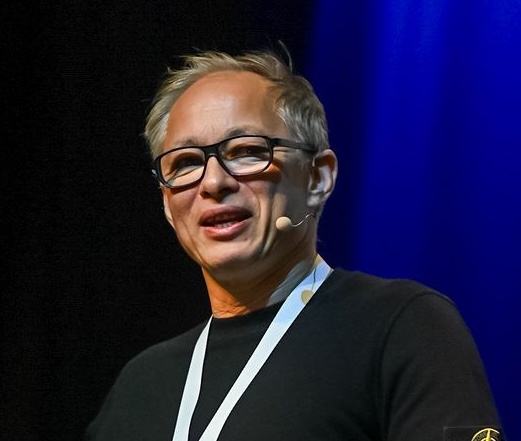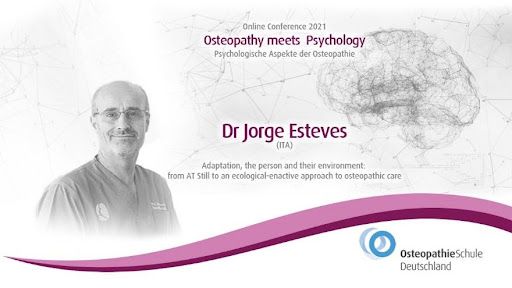
“Healing begins with the practitioner’s active listening and the development of a solid therapeutic alliance between patient and osteopath.”Dr. Jorge Esteves is Professor of Osteopathy and Deputy Director of ICOM (Malta). His research interests include palpation, affective touch, and the reconceptualization of osteopathy.On November 19, Dr Esteves will be giving a lecture at our Online Conference 2021:“Adaptation, the person and their environment: from AT Still to an ecologically active approach in osteopathic care”REGISTER NOWhttps://web.cvent.com/event/e52b2684-e9a5-4ef1-9e61-f3eb9bc1f042/summaryLearn more about Dr Jorge Esteves in our interview:WHAT WAS YOUR MAIN INTEREST IN OSTEOPATHY OVER THE YEARS, AND HOW HAS IT CHANGED OVER TIME?My osteopathic education and training were strongly influenced by “body-centred” models of osteopathic treatment. This shaped my clinical practice and my teaching for several years. Over the last 15 years, my teaching, my clinical practice, and my research activities have changed radically under the influence of my PhD in cognitive science. My practice is strongly influenced by research and knowledge from the fields of neuroscience, philosophy of mind, and cognitive science.WHERE DO YOU SEE THE POTENTIAL FOR THE FIELD OF OSTEOPATHY IN THE FUTURE?There is untapped potential for osteopathy as a primary-contact healthcare profession, but osteopaths need to move away from osteopathic treatment models that focus primarily on the body rather than the person. As Hoover suggested in 1963, osteopathy is an ecological medicine—a form of healthcare that considers the person in a close relationship with their environment. Osteopathy has focused too much on finding and treating dysfunction/pathology using a heavily biomedically oriented model of care. This urgently needs to improve—especially in osteopathic education—so that future practitioners practise according to key osteopathic principles and the best available evidence. YOUR FIELD OF ACTIVITY EXTENDS FROM CLINIC TO RESEARCH, TO TEACHING AND WRITING. HOW DID YOU BENEFIT FROM THESE INTERSECTIONS? It enabled me to critically evaluate the nature of knowledge and practice in osteopathy and to bring new ideas from various fields—closely aligned with osteopathy’s conceptual framework—into my clinical practice, teaching, and research.IN YOUR OPINION, WHEN DOES HEALING BEGIN?With the practitioner’s active listening and the development of a solid therapeutic alliance between patient and osteopath. This is key to a person-centred approach that is not solely dependent on hands-on treatment. COULD YOU GIVE US A BRIEF OVERVIEW OF YOUR LATEST RESEARCH WORK? WHAT SURPRISED YOU IN YOUR RESEARCH?In one of our most recent research studies, we compared the effect of 5 minutes of C-tactile afferents (CTs) at an optimal stroking velocity with 5 minutes of static touch on the heart rate and oxygen saturation of preterm infants between 28 and 37 weeks’ gestational age. CTs are a class of unmyelinated nerve fibres activated by low-force, dynamic touch. Consistent with an interoceptive function, touch specifically targeted to activate CTs activates the posterior insular cortex and has been reported to reduce autonomic arousal. We found that CT touch produced a significant decrease in the infants’ heart rate and an increase in their blood oxygen saturation, which persisted for a 5-minute period after the touch. In contrast, there was no significant change in heart rate or blood oxygen levels in infants receiving static touch. We believe our findings support the hypothesis that CTs signal the affective quality of nurturing touch, providing a neurobiological substrate for the apparent beneficial effects of neonatal tactile interventions and offering insight into how to optimise them.CAN YOU TELL US A LITTLE ABOUT YOUR LECTURE AT THIS YEAR’S ONLINE CONFERENCE, WHICH WILL ADDRESS THE TOPIC “ADAPTATION, THE PERSON AND THEIR ENVIRONMENT: FROM AT STILL TO AN ECOLOGICALLY ACTIVE APPROACH IN OSTEOPATHIC CARE”?Human beings are an example of a complex and dynamic adaptive system, and this should inform osteopathy’s clinical reasoning process. Where is the breakdown in the patient’s adaptive capacity, and how can osteopathy improve adaptability—these are some of the questions osteopaths face in their reasoning and decision-making. Living systems typically resist the natural tendency toward disorder by minimising surprise and uncertainty by acting on the world and updating their internal states—through active inference. A breakdown in the adaptive capacity of the person seeking care due to inflexible or distorted updating of inferential models leads to illness, with the therapeutic alliance available to support healthy adaptation.In my lecture, I will reconceptualise osteopathic care within the enactive–active inference framework: supported by a robust therapeutic alliance, osteopaths help patients make sense of their illness experiences by creating new body narratives about their changed or changing physical capacities and by tracing the effects on their identity, their relationship with their environment, and meaning in their lives. I will attempt to reconceptualise osteopathic care within the enactive–active inference framework as a unifying, integrative model. MORE INFORMATION ABOUT OUR ONLINE CONFERENCE 2021 CAN BE FOUND ON OUR WEBSITEhttps://www.osteopathie-schule.de/online-conference-2021/
English Version
DO YOU KNOW DR JORGE ESTEVES?Dr Jorge Esteves is a professor of osteopathy and vice director of the ICOM (Malta). His research interests include palpation, affective touch and reconceptualization of osteopathy.On November 19th, Dr Esteves will give a lecture at our ONLINE CONFERENCE 2021:„Adaptation, the person and their environment: from AT Still to an ecological-enactive approach to osteopathic care“JOIN NOWhttps://web.cvent.com/event/e52b2684-e9a5-4ef1-9e61-f3eb9bc1f042/summaryLearn more about Dr Esteves in our interview:WHAT WAS YOUR MAIN INTEREST IN OSTEOPATHY DURING THE YEARS AND HOW DID IT CHANGE OVER THE TIME?My osteopathic education and training were heavily influenced by ‘body-centred’ models of osteopathic care. That informed my clinical practice and teaching for several years. In the last 15 years, and heavily influenced by my PhD in cognitive science, my teaching and clinical practice and research activities changed radically. My practice is heavily influenced by research and knowledge from the fields of neuroscience, philosophy of mind and cognitive science.WHERE DO YOU SEE POTENTIAL FOR THE OSTEOPATHIC FIELD IN THE FUTURE?There is an untapped potential for osteopathy as a primary contact healthcare profession, but osteopaths need to move away from models of osteopathic care that are primarily focused on the body, rather than the person. Like Hoover suggested in 1963, osteopathy is ecological medicine – a form of healthcare that considers the person in a close relationship with their environment. Osteopathy became too focused on finding and treating dysfunction/pathology using a heavily informed biomedical model of care. This needs to be urgently improved – particularly in osteopathic education, so that future practitioners practice according to key osteopathic tenets and best available evidence. YOUR FIELD OF ACTIVITY EXTENDS FROM CLINIC TO RESEARCH, TO TEACHING AND WRITING. HOW DID YOU BENEFIT FROM THESE INTERSECTIONS? It enabled me to critically appraise the nature of knowledge and practice in osteopathy, and to bring to my clinical practice, teaching and research new ideas from diverse fields which are closely aligned with the conceptual framework of osteopathy.WHEN DOES HEALING BEGIN IN YOUR OPINION?With the active listening from the practitioner and the development of a robust therapeutic alliance between patient and osteopath. That is key in a person-centred approach which is not entirely dependent on hands-on care. COULD YOU GIVE US A SHORT OVERVIEW OF YOUR LATEST RESEARCH PAPER? WHAT SURPRISED YOU IN YOUR RESEARCH?In one of our latest research studies, we compared the effect of 5 min of C Tactile afferents (CTs) optimal velocity stroking touch to 5 min of static touch on the heart-rate and oxygen saturation levels of preterm infants between 28- & 37-weeks gestational age. CTs are a class of unmyelinated nerve fibre activated by low force, dynamic touch. Consistent with an interoceptive function, touch specifically targeted to activate CTs activates posterior insular cortex and has been reported to reduce autonomic arousal. We found that CT touch produced a significant decrease in infants’ heart-rates and increase in their blood oxygenation levels, which sustained throughout a 5-min post-touch period. In contrast, there was no significant change in heart-rate or blood oxygenation levels of infants receiving static touch. We believe that our research findings provide support for the hypothesis that CTs signal the affective quality of nurturing touch, providing a neurobiological substrate for the apparent beneficial effects of neonatal tactile interventions and offering insight for their optimisation.CAN YOU GIVE US AN EXPLANATION ABOUT YOUR LECTURE AT OUR ONLINE CONFERENCE THIS YEAR, WHICH WILL TALK ABOUT “ADAPTATION, THE PERSON AND THEIR ENVIRONMENT: FROM AT STILL TO AN ECOLOGICAL-ENACTIVE APPROACH TO OSTEOPATHIC CARE“? Humans are an example of a complex and dynamic adaptative system, and this should inform the osteopath’s clinical reasoning process. Where is the breakdown in the patient’s adaptive capacity, and how can osteopathy improve their adaptability are some of the questions that osteopaths face in their reasoning and decision making. Living systems typically resist a natural tendency to disorder by minimizing surprise and uncertainty by acting on the world and updating their internal states—through active inference. A breakdown in adaptive capacity of the person seeking care due to an inflexible or distorted updating of inferential models will lead to illness, with the therapeutic alliance available to support healthy adaptation.In the lecture, I will reconceptualize osteopathic care under the enactive-active inference framework: underpinned by a robust therapeutic alliance, osteopaths help patients make sense of their illness experiences by creating new body narratives about their changed or changing physical capacities and in pursuing effects on their identity, relationship with their environment and meaning in their lives. I will try and reconceptualize osteopathic care under the enactive-active inference framework as a unifying integrative model.MORE INFORMATION ABOUT OUR ONLINE CONFERENCE 2021 YOU CAN FIND ON OUR WEBSITEhttps://www.osteopathie-schule.de/online-conference-2021/