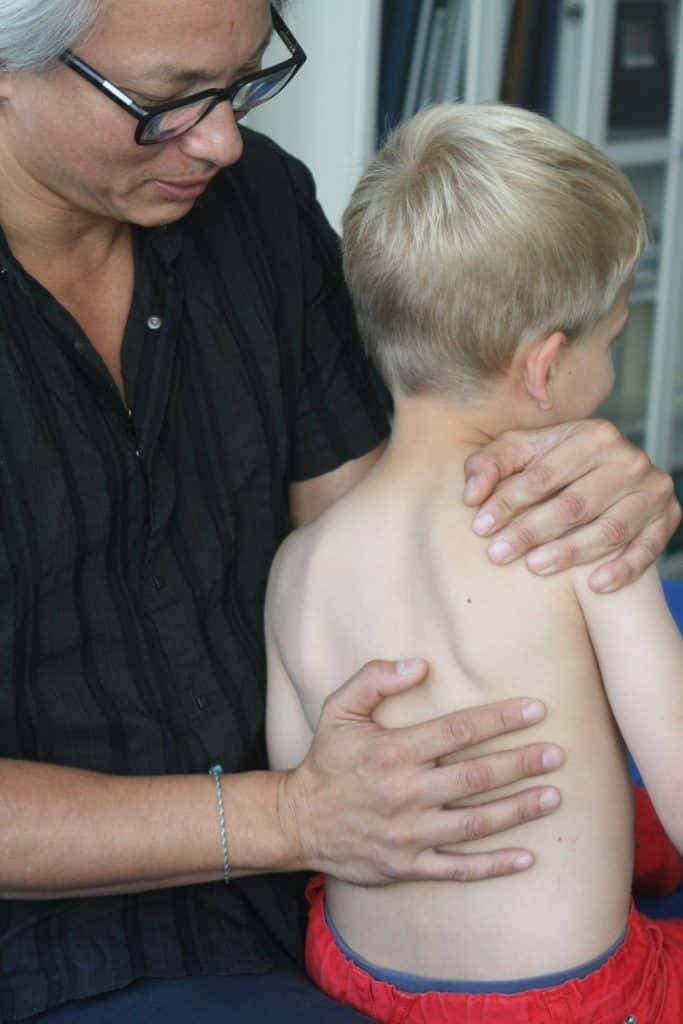
Asthma is a condition that frequently occurs in children. As a chronic disease, asthma can lead to increased absences from school, hospitalizations, and death. In children with asthma, OMT that focuses on the structure and function of the rib cage can be used to maximise the effectiveness of the breathing cycle. From an osteopathic perspective, an effective breathing cycle can be achieved by optimising the mobility of the thorax and thoracic spine in order to fully utilise the potential of the ventilatory mechanism. In addition, asthma itself creates a self-perpetuating cycle of viscerosomatic and somatovisceral reflexes, which can also be influenced with OMT.
As a non-invasive treatment method, OMT could contribute to reducing mortality and morbidity rates in children.
In 2005, Guiney et al. conducted a randomized study of acceptable methodological quality, which found that OMT in the intervention group led to a significant improvement in peak expiratory flow rate of 7 L per minute to 9 L per minute. These results suggest that OMT has a therapeutic effect in this patient population and is therapeutically relevant. Nevertheless, further large-scale studies are needed to strengthen the evidence.
Guiney PA, Chou R, Vianna A, Lovenheim J. Effects of osteopathic manipulative treatment on pediatric patients with asthma: a randomized controlled trial. J Am Osteopath Assoc. 2005 Jan;105(1):7-12.