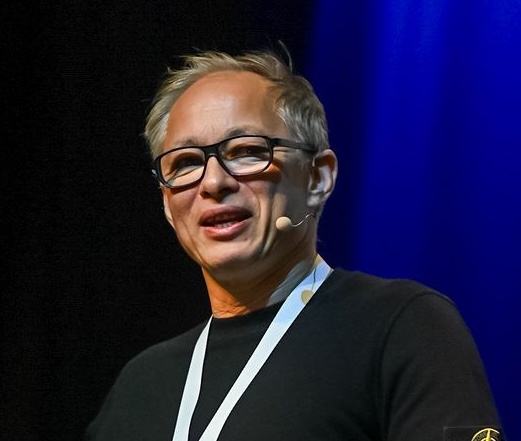
Interview by Bruno Ducoux and Torsten Liem on September 30, 2001, in Wales
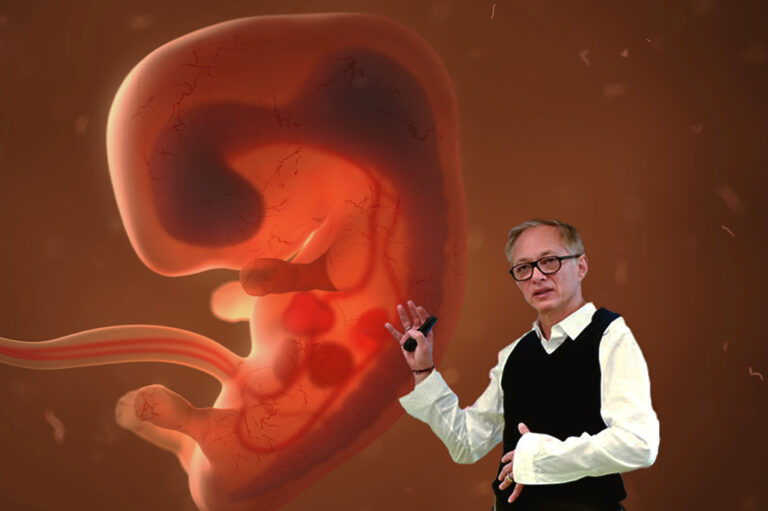
Bruno Ducoux: Dear Jim, how did you come to osteopathy? My father was an osteopath, as was my godfather. Regarding my career path, I initially studied botany with the intention of becoming a forester, to live in the forest and work with trees. At university, I then studied philosophy, botany, and medicine. During my third year, I came across the books of A.T. Still, which corresponded exactly to my philosophy. When I left for Kirksville, I expected to be introduced to the “natural world” within the human being. Still’s medicine was a natural treatment, free of medication and without external additives, which consisted of utilizing the God-given pharmacy in every person’s brain. From the age of 14, I worked in an osteopathic hospital and was thus able to gain a lot of experience in this field. I then studied for 14 years before finally choosing a quieter spot to work with people in nature. Bruno Ducoux: What is your opinion on allopathy? What I appreciate about allopathy is that conventional doctors do what they say; osteopaths, on the other hand, do not always practice osteopathy. In Kirksville, one learned to know what the patient needs and that there are no limits to that. If a surgical intervention or allopathic treatment was prescribed there, it was done with a view to the patient in their wholeness. If an antibiotic was prescribed, it was not because of the symptoms, but because our hands told us so. The underlying thought process was not conventional medical, but osteopathic. As osteopaths, we see ourselves as support, adapting to the patient’s way of life and not acting like an authority telling the patient how to live. The patient is not categorized. One can nevertheless prescribe medication in an osteopathic sense under certain circumstances. I write about two prescriptions for medication per year, not because I reject prescriptions, but because I simply do not need them. Bruno Ducoux: Do you believe that some osteopaths work with their hands in an allopathic way? I must be fair and say yes, because the allopathic concept consists of dissolving the lesion rather than supporting the patient’s health by letting nature do its work. The cause is not necessarily located where the lesion is. My father, for example, worked in an allopathic way, with medication, injections, and manual osteopathic treatments! Torsten Liem: Your teaching and your work are called “biodynamic.” What distinguishes them from other cranial approaches? At some point, it became necessary to introduce the term biodynamic. In Kirksville, I initially learned biomechanical techniques, e.g., intersegmental release, the release of movement or a resistance between two segments with a change in texture at the end of treatment. The basic principle of these treatments is to release the tension, no matter how, but to achieve it. We were also trained by Gordon Zink in functional techniques: it was necessary to find the position of facilitation, where the movement represented the lesion, even more than the texture or the resistance. A completely different way of thinking. I studied the functional approach intensively. When applying a functional technique, one utilizes the existing movement within the lesion and allows it to approach a true neutral point, a dynamic equilibrium through which the entire system can interact with every single part. The next step was to feel neutral points that were systemic in nature and not locally related. In general practice, one encounters a wide variety of cases: people requiring surgery, cancer patients, people with metastatic carcinomas. These people need help, either because their immune system is not working as it should, or because their mobility is restricted. In this case, we cannot use biomechanical techniques as they require a lot of pressure on the organism. Here, I can apply functional techniques. I had to help these patients; I served my patients, my neighbors, my friends, and consequently placed my hands on them. The functional techniques allowed me a light touch and movement. I felt the presence of the movement and played with the gentleness. Once the local neutral point was reached, this point expanded within the organism, and I felt the global respiration of the patient and their body, which were in reciprocal connection. That was magnificent. Had I not learned the functional techniques, I would have required more medication. I began learning them in 1965, started using them in 1966, and received my diploma in Kirksville in 1969, but I remained at the college to teach anatomy. In addition, I taught functional techniques. Dr. Bond and Dr. Hall were living with Sutherland in Pacific Grove, California, when I first met them. They handed me some books and a skull and told me to look at them. I didn’t know who these two were, but since I had already attended a course in cranial osteopathy in Kirksville in 1966, I could make sense of it. At the same time, I met Ruby Day, who lived a mile away from me. She was a student of Sutherland’s but had also taught alongside him in his courses. I subsequently visited her more frequently, and she began to teach me cranial osteopathy. I can divide the 15 years I spent by her side into three phases. Initially, she taught me to treat in a way that I reached the barriers. In the second phase, it was about feeling the fluctuation of the fluids at the level of the barriers, letting go of the barriers themselves, and letting the fluids work. She slowly led me from a mechanical treatment approach to a cranial approach. It was a more functional approach in which one observed the fluctuation of the fluids. I already knew the functional techniques, but Ruby Day trained me to perceive the fluctuation of the fluids instead of repeatedly seeking out the barriers. At that point, I was already treating with a systemic approach and was constantly looking for a response from the whole body. I then moved away from that, as I immediately understood what I was doing, except that it was not normal respiration, but the primary respiratory mechanism. She continued to direct my attention from the fluids to the “potency,” to dynamic stillness. She succeeded brilliantly in leading me there over the course of 15 years. To understand this, one must know the following: I met her when I was 30 years old and had been practicing my profession for 2 years. At 35, I was still practicing, had good success, many patients, and an ego that could kill a bull! She had to guide this ego, and she did so very patiently. She caught me at the turning point of my path and let me feel that I had gaps and limits. With some patients, I achieved no change at all, not even a clinical result. She would come, treat the patients in 2 minutes, and dismiss them with the words “Everything is fine.” That was when I became aware of my ego. I started to meditate and continued my visits to her every fortnight. She let me stew in my ego and my own juices, telling me all sorts of things except what I wanted to learn and know, until one day she said: “That’s it, you are ready, now let’s move on to something else.” Looking back, the worst thing for me is that I didn’t ask her what she had noticed, what had changed. I now entered the third stage, which was about feeling the external presence of primary respiration. This was no longer a purely functional technique, as the endpoint no longer lies within the musculoskeletal system; it lies within the patient as a whole, and it extends to their environment, their natural surroundings. One also feels its influence on the environment in which one is treating. I then set out to feel primary respiration in all of nature, not just the one tree, the one plant, but the whole. And here we come to what Still observed: “There is man, nature, and God.” These are the three biological areas with which we as osteopaths must treat. But what happens when they become one? In that moment, healing begins. This is an extraordinary endpoint, and I had to find a new term for it. Between 1982 and 1992, I did a lot of research and study. During that time, I taught embryology at the SCTF. There I met Blechschmidt, who had written that fluids have their own consciousness. I wondered then whether the fluids that Blechschmidt felt were the same ones that Sutherland perceived, which would mean that the law of fluids in the embryo also applies to the adult. I am no genius, but this interested me greatly. I spent hours upon hours pursuing and investigating this. I examined my patients, studied Blechschmidt’s writings, and everything Sutherland said about the law of fluids, their function, and the intelligence inherent in everything. Sutherland and Blechschmidt attribute a power to the fluids that enables them never to make a mistake. I then began to explore whether what Blechschmidt said could be transferred to the adult, and whether what Sutherland observed was applicable to the embryo. When I was treating Dr. Becker one day, he made a remark and asked: “What are you doing?” I replied that I was treating him. But he told me that I should only start a treatment when the patient’s will gives way to the will of the primary respiration. So I did not start the treatment yet, but waited for a neutral point, thinking that this usually signals the end of the treatment to me. At that moment, Becker turned to me and said I could now begin the treatment. With that statement, he destroyed everything I had achieved up to that point…. It took me 5 whole years to change, to shift my focus from the movement of the lesion to the neutral point, and now this. Torsten Liem: What is the difference between a neutral point and a still point? Every osteopath must know what a neutral point is compared to a still point. If you are not careful, you can mistake a neutral point for a still point. They are not the same at all. The neutral point is a point of balance where no tension exists. Once the neutral point is reached, the patient can be “moved” freely by primary respiration. A neutral point does not spread over the entire body, whereas the still point does. A still point will trigger a change; it possesses a therapeutic dynamic power. At this point of equilibrium, where most believe their technique is complete, the functional cranial techniques actually begin. However, they cannot be directly called functional, as Blechschmidt’s model states: “The fluids are influenced by external phenomena,” or Sutherland’s model: “The human being is a house under the sea.” The patient becomes a segment in the greater whole, moved by the external primary respiration. This leads us to the rule that the external has a dynamic influence on the internal, and we begin to recognize that there is an interaction between the external primary respiration and the patient, and then we perceive a deeper healing that differs from other approaches. In a functional technique, the patient feels better within a few days, but in the biodynamic model, the treatment only begins when the patient leaves the practice, and it can last for several months. One leaves the patient to themselves, not only regarding the lesion but in view of the neutral point or their health. Consequently, we needed another term for this approach, which, however, did not occur to me until I started giving courses that I was asked to provide. I held two courses which I called “Biodynamic Approach in Osteopathy.” “Biodynamic,” because one treats with a model that follows what Blechschmidt recognized in embryology and what Sutherland also expressed later in his life. This is not a functional approach, which is oriented more toward segments. Rather, one views the patient as a unit. And it is not about an idea, but a sensory experience… I was very surprised that 700 participants enrolled in both courses, even though I did hardly any advertising. I was not prepared for that. Since then, I have been giving courses. Torsten Liem: You speak of the “Breath of Life” – what is it? It is a waste of time to talk about it, because actually no one talks about what it really is. No one will tell the truth, because it is a great secret… The human being has the potential to possess the perfect response to the Breath of Life. But most of us are so busy thinking about ourselves, being very mentally inclined, that our responses are mutilated or limited. Throughout the centuries, however, there have been prophets and saints, people who simply know everything and have responded to the Breath of Life without thinking, which in a way corresponds to the word “divine.” They heard “turn left” and did so without thinking or questioning, even though there was a 10-meter high wall in front of them. The Breath of Life told them “go through this wall” and they did it without thinking about whether it might be stupid or crazy. The embryo is the perfect response to the Breath of Life. It encompasses wisdom, geometry, transcendence, and is created to heal, with an abundance of love for all fellow travelers. You know it when you experience the effect of a pure response to the Breath of Life. You know that when the response to the Breath of Life is pure, the neutral that was experienced is boundless. Through this boundlessness, a sense of fullness can be experienced, and beyond that, a sense of grace. It is important to understand what I am saying, because it is the feeling of grace that overcomes us. When no more movement is felt, then for a second we become perfect, complete, even if we are already chasing the next experience. The trick with the Breath of Life is that it cannot be experienced if one has the desire to experience it. We do not have the choice to approach it; rather, it approaches us. Those who wanted it did not talk much about it, because it is not a question of technique. For us, who do something to get to the other side, this grace is not perceptible. The Breath of Life is a mysterious presence of love itself, which is present everywhere. The first effect that the Breath of Life brings about everywhere is perfection. And then the change sets in. As a religious person, the idea might arise that “good and evil” exist, but as a physician, that is not our concern. We are there to serve the patient. We cannot allow ourselves to judge what is good or bad for the patient; we must remain neutral. The fact of viewing a patient as a lesion disqualifies us as caregivers. The Breath of Life allows us to take a neutral position that corresponds to love itself, which does not spring from our own heart, but from the heart of the world. This is a difficult subject, because some people cannot reconcile themselves at all with the idea that the Breath of Life can accomplish everything and not just partially. For us, however, this is important, because in our profession we do not want to oppose the patient, and it does not matter whether they are good or bad. Our work consists of truly healing them, and perhaps then they have no one as an opponent. For us, the Breath of Life is something completely different because we cannot take a philosophical position. Everyone who enters our practice receives the same service. There are no religious dogmas whatsoever. Bruno Ducoux: You speak of the biodynamic model being present in osteopathy, and that is almost like saying that America already existed before Christopher Columbus discovered it. Now we are beginning to discover something that was already there. Is the biodynamic model already mentioned in the writings? There are only five to six people who perceived it, including Ruby, Dr. Becker, and a few others. When Ruby taught me, I was among a privileged few. Ruby was already a professor before she attended an osteopathic training institution, so she already knew how to handle information she received through Sutherland’s teaching. When I began studying with her, she had no other students; she didn’t want any. She was very secretive about the subject. she waited a long time before she took me into her confidence, perhaps 6 to 7 years. And perhaps I was not trustworthy until then. She had a personal teaching program that was specifically tailored to me. And she taught me in the same way that Sutherland had taught her. She was precise. Every time I asked her questions about Sutherland, she looked me in the eye with her steel-blue eyes, her white hair, her five-foot-one stature, her ninety pounds, and made me feel afraid. And every time she merely replied: “He was a very lovely man.” What we must further realize is that at the age of 86, Dr. Still said: “I love my patients because I recognize God in their faces and bodies.” He saw more than their lesion, their suffering. He saw something divine, otherworldly in their forms. In a sense, he gave me permission to recognize that perhaps a divine image stands, lies, or sits before me. The teaching I received gave me permission for such thoughts. I certainly did not feel like a non-osteopath when I began to recognize the wholeness and perfection in the patient. You must not “seek out” a lesion in the patient. In a biodynamic approach, one must know about the limitation of the lesion, in the sense of restriction, and something about the force vectors of the preceding event. In a functional approach, on the other hand, it is important to know the degree of mobility of the lesion. In a biodynamic approach, the wave and the presence of primary respiration will provide us with the diagnosis and prescribe the treatment, and as Dr. Becker used to say from time to time: “When the treatment is finished, then you can begin the analysis.” If you place your hands on the patient, you may discover a lesion that is still there when the treatment is finished. Perhaps the lesions will only have disappeared by the following visit and then none can be found. In certain anatomical regions, specific things can be recognized. However, one makes a great mistake if one names what is found after an anatomical area, because, for example, in the anatomical region of the shoulder, there is much more than just a shoulder.Bruno Ducoux: Do you not believe that those who do not apply the biodynamic model, but instead use structural biomechanical techniques, can achieve the same result?Certainly, they arrive at the same place. One must not forget that the biodynamic approach is a pedagogical model of osteopathy. There are many therapists who use structural techniques and arrive at the point of balance before applying force, who experience it through the patient’s experience and who are magicians. But they find it difficult to teach this practice. I have seen therapists who use structural techniques with little force, who perceive that a change is happening in the patient, and who lead their patients to a neutral point. Today’s osteopathy can only reach the admirable intelligence of its ancestors if one learns to teach what they practiced, and that is what the question is about. In the end, I will ask you not to take what I have taught you seriously, because you already possess the ability. The greater part of osteopathy has always remained a secret because we do not know how individual osteopaths got there. They do not talk about it, but they have their own model. All I am doing is revealing something that has always been there. Did Still do that? I don’t know and I don’t care. All my life I have seen osteopathy suffer because its ancestors did not respect it. They championed osteopathy but could not explain it in simple words and thus only reached intellectuals who had no practical experience. Furthermore, they could not teach well because they did not know what to say. I myself did not receive a great education; I grew up in the woods, I am not a learned Englishman or a writer. Bruno Ducoux: Do you believe that the word “osteopathy” corresponds to our art? In France, there are already several discussions on this topic. First of all, I laugh every time a discussion about the word osteopathy takes place. One should not take it too seriously. One should not fight over osteopathy; it is too beautiful, one should approach it more romantically! Here is my little osteopathic anecdote: I am sure that Dr. Still knew that the first function to occur in the embryonic germ disc consists of the movement of the neural tube, and he knew that hidden in the bones was the secret of the magical divinity of the complete program. What then is the very first task of the embryonic germ disc? It consists of secretly forming the musculoskeletal system, which is the first system to technically appear. What a brilliant starting point! That reassures everyone! Torsten Liem: In your opinion, what are the most important qualities for us practitioners? In my opinion, the first thing one should do is return to the original motivation. To the first time you had the thought “I want to help people.” And then to return there again and again from time to time, to ask yourself why I became a doctor, why I wanted to be an osteopath. Because what we often forget is our work. Our work does not consist of giving a treatment, but of caring for suffering people, not forgetting the patient and treating them. Our work consists of discovering “the normal” and “the wholeness,” so one must learn to approach a patient and be present. For how many patients does what they found when they laid their hands on them correspond to the answers in the initial interview? Patients often tell us stories, almost tall tales. The reason why much does not happen is that patients do not trust us. They appear in our practices and look at us as doctors. The worst thing that can happen. Our work is a privilege. It triggers fear to sit down and look a patient in the face, a patient who mirrors us. It is sometimes uncomfortable to recognize that this suffering person is just as stuck as oneself. If it is possible to let one’s spirit be humble, one can do more for people and let God’s grace happen. Too many doctors forget why they are there. They work for the sake of their money. I have never been poor since I started practicing. I have never sent back a bill; I have never had an insurance case due to poor practice. It is a privilege to serve the community. Consequently, such things do not happen to me. I have always been paid or not, but I always had enough money to live. This must happen in innocence. Osteopathy is in the service of suffering in the world and not in our personal service. Osteopathy is at its best when the patient rules the moment. And wisdom consists of being there to serve… Torsten Liem: You say that the relationship between patient and practitioner is important? No, it is the relationship between the primary respiration and the patient and the practitioner. Bruno Ducoux: Is osteopathy a science? If science were unlimited, I would say yes. But if you are talking about modern science, I will say no, because modern science, economically speaking, is based on research, which in turn is based on its own dogmas. If you look up the meaning of true science in the English Oxford Dictionary, it says: “Any observation of the natural world that can be proven repeatedly, by eyes or hands.” Osteopathy is not a study with a double-blind study, but with hundreds of blind studies. When you have arrived at a concept, everyone will call you crazy; they will contradict you, and after 20 years of arguing (it should be noted in passing that one should not argue), they come back to tell you that it does work after all and that the concept is confirmed. Osteopaths represent a much more difficult group than any other scientific grouping. The scientific approach of this professional group is difficult. In my opinion, in every respect, and I find that reasonable. In the biodynamic approach, there is another element: we strive to restore health in everyone. We do not strive to fight each other, but to express the same thing, and that this serves to help people. We learn a lot thanks to those who share their ideas and experiences with us. When you come up with a new idea, it is thoroughly dissected, and that is a good thing. Bruno Ducoux: But are we not wasting our time with that? If the careful examination has the purpose of crushing an idea, yes. But if the goal is to look at the matter objectively, it is good. It is never about defending one’s position; one must present it openly. Bruno Ducoux: What would you say at the moment of your death? I would say nothing; I would simply be grateful. It was an extraordinary life. Imagine, I have had the privilege of seeing a fluid lesion, the fluid body, the fluid wave, the embryological field… and the privilege of talking about it. I have been granted the privilege of seeing the health of my patients, which I did not believe I could see. Therefore, I also did not believe I possessed the corresponding abilities, and therefore I did not possess those abilities. But God gave them to me. I don’t know how; all I know is that I thought I was lost… and one day, BOOM, it happened! I am very, very grateful for that. But if that had happened to me five years earlier, I would have remained standing despite all the honor! I would not have experienced the health of my patients and I would have limited myself. I would have remained stuck without knowing it. And I would never have seen how wonderful it all is. When you place your hands on the patient, it happens through God’s grace. You feel that or you don’t.
Interview with Jim Jealous by Bruno Ducoux, Torsten Liem – Osteopathische Medizin, Issue 10/2001;