Summary
In the early 20th century, patients during influenza pandemics were not only successfully treated osteopathically, but also showed significantly lower mortality rates compared to patients who received medical treatment. Possible dysfunction patterns and the treatment approaches of early osteopaths are presented and discussed in this article. In the early 20th century, pandemic influenca patients were not only successfully treated with osteopathy, they also showed significantly lower mortality rates compared to those undergoing medical interventions. Possible dysfunction patterns and treatment approaches of early osteopaths are presen- ted and discussed in the article.
Introduction
Influenza patients who received osteopathic treatment during the influenza pandemic in the United States, particularly between 1917 and 1918 at the end of World War I, showed a lower mortality rate of 0.25% compared to the national average of 6% (and 10% for pneumonia patients compared to 33–75% for the national average). Although the figures collected shortly after the pandemic should be treated with caution, as reliable pathogen detection was not possible and the methodological approaches naturally do not correspond to today’s procedures, the data are impressive. Numerous successful case descriptions of the influenza pandemic are available (Andrews 1919, Black 1919, Bush 1919, Cosner 1919, Cozart 1919, Hammer 1919, Fetzer 1919, Grisso 1919, Linville 1919, McCole 1919, Moffett 1919, Peterson 1919, Riley 1919, Smith 1919, Ruddy 1918, Howes 1918), as well as treatises on influenza (Bland 1920) or pneumonia (Geeslin 1910). Fraser (1919) pointed out that only light, short treatments should be given to avoid further exhausting the patient. According to McConnell (1918), it was particularly essential to treat patients multiple times early, at the first sign of symptoms – preferably within the first 24 hours. These treatments were generally individualized and consisted of techniques for muscular relaxation, especially relaxation of the contracted deep spinal muscles, as well as spinal mobilization and other supportive measures, such as ensuring sufficient water intake. During influenza epidemics in 1928–1929 and 1936–1937, lymphatic pump techniques and especially techniques for the cervical and upper thoracic regions were also applied in addition to the aforementioned techniques (Ward 1937). So far, there are only speculations regarding the mechanisms of action, such as the reduction of somatic input from contracted muscles, which could further stimulate the already overactive sympathetic nervous system and potentially exacerbate an existing sympathetic hyperreactivity – leading to overshooting and potentially fatal immune responses (Patterson 2005). In the later course of the infection, OMT could also have supported lymphatic drainage and an adequate immune response (Patterson 2005). Current studies by Hodge et al. (see below) show how lymphatic pump techniques can have a strong effect on the lymphatic system. Further studies also demonstrate the success of OMT in other infections such as pneumonia (Noll et al. 2008, 2005).
History
The development of bacteriology and immunology was controversially discussed within American osteopathy in the late 19th and early 20th centuries. McConnell and Littlejohn – unlike Still – were of the opinion that pathogens could be the active causes of diseases, while spinal dislocation or what was subsequently understood as spinal lesion could be the predisposing cause (Gewitz 2004). Consequently, osteopathic treatment for infectious diseases would enable the body’s defenses to respond better to pathogenic microorganisms (Liem 2015, Littlejohn D 1898, 7, Littlejohn J 1898, McConnell 1899). As a result, early osteopaths diagnosed lesions and treated them according to these findings (Liem 2016, Liem 2017, Liem 2017). This particularly involved the diagnosis of abnormal bone and muscle deviations known to produce dysfunctions in body organs (Duffell 1939, 1943). According to these concepts, osteopathic treatment, depending on the knowledge of the affected organs at the time, looked similar for various infectious diseases. For example, according to Northup (cited by Magoun 2004), pneumonia and influenza should be treated similarly. Differences might arise from the fact that the treatment approach focused on the structures to which the respective pathophysiological explanations regarding the symptoms of the respective infectious diseases were attributed. At that time, these were generally mostly spinal structures, but also other body areas. A treatment concept in the true sense is usually inseparable from the then-current ideas about the cause, the described dysfunctions (both usually mechanical), and the body regions to be treated. Following this concept, the treatment primarily aimed to remove obstructions so that the vital fluids could flow freely again. Early osteopaths linked the elimination of the cause to the restoration of mobility/movement of all tissues to ensure free circulation of all body fluids, so that the body’s self-healing powers could act optimally against pathogens. Based on the approaches of early osteopaths, treatment concepts have already been presented, e.g., for the treatment of pneumonia (Noll, Degenhardt, Fossum 2008), scarlet fever (Liem 2011), and whooping cough (Liem 2019).
Treatment Concepts
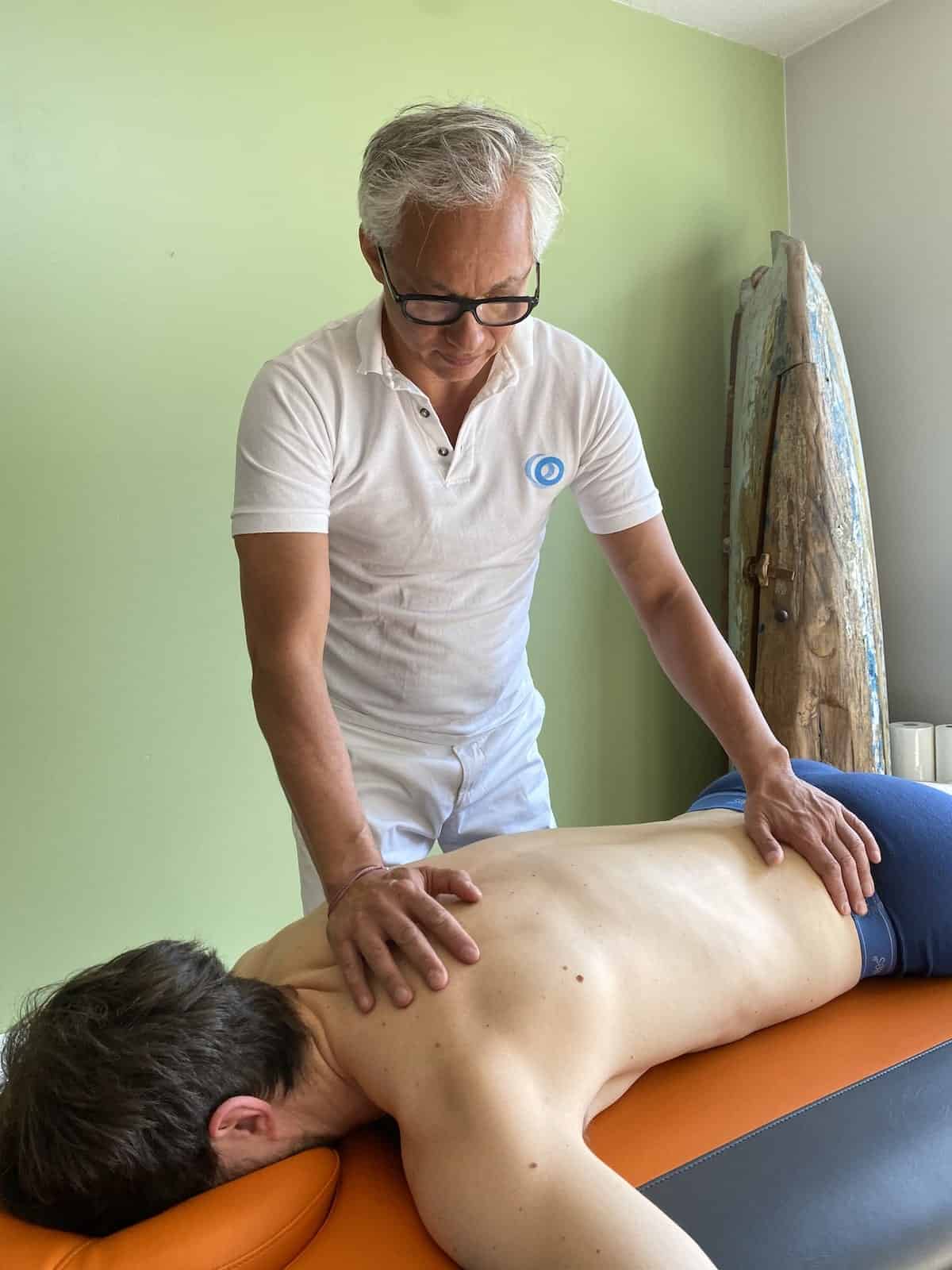
The treatment concepts based on the above-described ideas of early osteopaths regarding causes and mechanisms of action are presented below. For example, according to Bland (1920), the treatment of influenza was directed at cervical and splanchnic regions, abdominal muscles and extremities, atlas, axis, and the neck area. Following Hazzard (1901) and Feidler (1906), osteopathic treatment for infectious diseases largely corresponded to the treatment for fever, e.g., general spinal treatment, especially parascapular, stretching of the neck muscles (especially suboccipital below the ears and jaw), between eyebrows and nose, jaw, clavicles, ribs, deep abdominal massage, liver and spleen treatment, palate and tonsils, and ensuring good bowel movements and regular urination. Furthermore, a constitutional treatment (Hazzard 1901) was carried out, aimed at opening excretory channels, stimulating kidneys, ureters and bladder (Still 1910), as well as sweat glands (Hoefner 1904, Feidler 1906) and the skin. A main focus was on eliminating “barriers” in the body. In principle, early osteopaths tried to achieve this through a variety of treatment modalities, such as direct, indirect, or combined techniques, varying rhythm, amplitude, and force. This resulted in various approaches such as Still techniques, exaggeration techniques, etc. (Table 1). Characteristic of manipulation techniques used in the treatment of acute infections is the goal of reducing or releasing muscle rigidity. Denslow had found that muscles in acute infections can be rigid without being cramped. The muscles can cause spasms from very slight stimuli that would not cause a reaction in a healthy patient. From this observation, it practically follows that sudden or painful applications of force should be avoided in treatment, as they exacerbate the existing problem. In general, it is advisable to treat the patient in such a way that both therapist and patient are in a comfortable position. The forces applied should be aimed at stretching all supporting tissues and joint surfaces (Denslow JS, 1993). This can be done in prone, supine, or sitting positions. For example, in a sitting position, the shoulder girdle can be encompassed, applying pressure to the muscle and rhythmically springing the involved joints. The fingers are placed close to, but not on, the spinous processes. Direct pressure is applied to the spinal muscles. The joint surfaces are moved rhythmically (Fig. 1). In all these techniques, forces are applied until rigidity and hyperreflexia noticeably decrease. Above all, the suboccipital region should be treated very gently, according to studies by Purdy, Frank, Oliver (1996). Additionally, myodural treatment in the suboccipital area (Liem 2017) and pressing sensitive points in the cochlea could downregulate the activity of the spinal trigeminal nucleus. Gentle stretching of dural structures could also potentially – by activating Ruffini corpuscles – downregulate the sympathetic system (Liem 2014). Murray (1925) recommends treating the neck muscles, back, and entire spine: relaxation technique for the neck muscles in a supine position, flexion and stretching of the neck tissue, gentle pressure technique from the forehead to behind the ears, paravertebral relaxation, back relaxation in a prone position, thumb pressure technique on both sides of the spine in a prone position, shoulder and spine treatment in a sitting position. Figures 2–7 show modified hand positions by the author. Feidler recommends treating the neck muscles, back, and entire spine (Feidler 1906), e.g., by gently springing them.
Fig. 1: Springing of involved joints
Fig. 2: Relaxation technique for the neck muscles in a supine position
Fig. 3: Flexion and stretching of the neck tissue
Fig. 4: Pressure technique from the forehead to behind the ears
Fig. 5: Paravertebral relaxation
Fig. 6: Back relaxation in a prone position
Fig. 7: Thumb pressure technique on both sides of the spine in a prone position
Clavicles and Ribs According to Still (1910), the clavicle should be brought slightly anteriorly, with the aim of eliminating any compression or irritation of the arteries and nerves, as well as the venous and lymphatic drainage and regeneration systems (Fig. 8).
Fig. 8: Anteriorization and correction of the clavicle
Rib treatment is particularly essential when the respiratory organs are affected (Patton Hitner 1929, McFarland 1935). According to Patton Hitner (1929), it should be used for pneumonia and represents a primary treatment. One hand is placed on the posterior rib heads, the other on the anterior ribs; the ribs are rhythmically adjusted in their angle by alternating pressure from hand to hand. Another procedure, according to Patton Hitner, can be performed in a side-lying position. Here, the ribs are individually pressed down in the side-lying position, while the arm is stretched overhead with the other hand. This should be held for a moment, then the arm can be lowered again. This procedure should be followed for all ribs. Following Feidler (1906), the 1st rib is mobilized inferiorly, and the remaining ribs are lifted and then mobilized inferiorly. Figures 9 and 10 show modified executions of rib techniques. It is important to always follow micro-movements of intraosseous and visceral structures (lung lobes, pleura, heart).
Fig. 9: Technique for the first rib
Fig. 10: Technique for the remaining ribs
In another technique performed in a sitting position, rhythmic segmental flexion and extension movements with combined side bending and rotation can be performed on the ribs. Simultaneously, the rib connections are gently compressed or decompressed. Intraosseous micro-movements are followed, as are the underlying visceral tensions of lung lobes and fissures (Fig. 11).
Fig. 11: Further rib technique in a sitting position
Treatment of the Lymphatic System Historical reports: Still 1902, 1910, Beitel 1910, McConnell 1917, Millard 1922, Purse 1936 and many more. Treatment is partly carried out by influencing the bloodstream through the nerves as well as through the lymphatic system of the fascia (Still 1902). For example, congestion in any lymph node of the face, neck, or other body parts (Beitel 1910) and lymphatic flow to the pharynx (Millard 1922) are to be treated. Spleen treatment (see below) seemed to have been performed frequently. Current studies indicate that the efficient pressure to drain fluid from the interstitium into the lymphatic system is 60–80 mmHg (Belgrado 2014). Even a uniform movement of the skin is said by Ikomi (1985) to be sufficient to increase the flow by 20 times. Here, effleurage as self-therapy may seem useful. According to Purse (1936), for whooping cough, a 10-minute lymphatic pump should be performed after 3 to 5 minutes of cervical spine mobilization and back muscle relaxation. Lisa Hodge, in particular, has conducted much research in recent years and investigated the effect of lymphatic pump technique (LPT). The results of a 2015 study by Hodge suggest that 3 applications of LPT can provide an additional protective mechanism in combination with antibiotics and as an adjunct in pneumonia. Schander et al. (2013) also showed that LPT can repeatedly improve the lymphatic and immune system. In this study, abdominal compressions were performed on anesthetized dogs at a frequency of approximately 1x per second for a total of 4 minutes. Among other things, a significant increase in lymphatic flow in the thoracic duct, leukocyte count, total leukocyte flow, interleukin-8, and superoxide dismutase (an important enzymatic antioxidant with exceptionally high protective potential for cells) etc. was observed. Figure 12 shows lymphatic pump techniques on the abdomen, feet, and sternum. According to Millard (1922) and others, the pharynx should be drained. Following Millard (1922), attention should also be paid to muscular contracture and bony lesions in the neck area, hyoid bone, mandible, and clavicle. For pharyngeal drainage, for example, the tissue below the mandible and the sternocleidomastoid muscle is manipulated. Treatment of the palate and tonsils was performed by Feidler (1906) using gentle intraoral drainage of the palate and tonsils.
Fig. 12: Lymphatic pump techniques on the abdomen (a), feet (b), and sternum (c)
Fig. 12: Lymphatic pump techniques on the abdomen (a), feet (b), and sternum (c)
Fig. 12: Lymphatic pump techniques on the abdomen (a), feet (b), and sternum (c)
According to Patton Hitner (1929), tissue congestion is accompanied by corresponding lymphatic dysfunction. For example, in measles, treatment should never be applied over an enlarged or hardened lymph node, but by freeing efferents so that the lymph drains. Additionally, it seems sensible to also perform drainage of the deep cervical lymphatic vessels. Following Belgrado (2014), the neck can be rhythmically compressed and decompressed alternately in combination with side bending and rotational movements (Fig. 13).
Fig. 13: Drainage of the deep cervical lymphatic vessels according to Belgrado
Still (1910) and many other early osteopaths recommend treating the neck and mandible. Mandibular treatment should serve to drain important retromandibular lymphatic and other vascular structures. Thus, one hand can first be placed under the neck and muscular relaxation achieved with circular movements, then the fingers of the other hand can be placed posterior to the mandibular angle to perform a gentle, slight distraction of the jaw and neck (Fig. 14). According to Feidler (1906), the mandible should be gently opened against resistance. He also advises positioning the patient supine for whooping cough. Subsequently, the deep tissue under the jaw should be stretched and softened. It is pulled towards the chin, while the hyoid is also repeatedly moved as far forward as possible. It is helpful to alternate sides.
Fig. 14: Treatment of the mandible
Strengthening the Immune System and Detoxifying the Body Historical reports: Willard 1927, Ulrich 1941, Steen 1951. Spleen treatment was performed (e.g., Feidler 1906, Willard 1927, Patton Hitner 1929, Jones 1933, Castlio & Ferris-Swift 1934, McFarland 1935). According to Willard (1927), the spleen and other antibody-producing regions should be stimulated. According to Castlio & Ferris-Swift (1934), the tissue covering the spleen from front and back should be alternately compressed and released bimanually. Compression should be slow and careful, relaxation abrupt. The treatment should be performed for 1.5–5 minutes at a frequency of 20 repetitions per minute (Fig. 15).
Fig. 14: Treatment of the mandible
Still (1910) and many other early osteopaths recommend treating the neck and mandible. Mandibular treatment should serve to drain important retromandibular lymphatic and other vascular structures. Thus, one hand can first be placed under the neck and muscular relaxation achieved with circular movements, then the fingers of the other hand can be placed posterior to the mandibular angle to perform a gentle, slight distraction of the jaw and neck (Fig. 14). According to Feidler (1906), the mandible should be gently opened against resistance. He also advises positioning the patient supine for whooping cough. Subsequently, the deep tissue under the jaw should be stretched and softened. It is pulled towards the chin, while the hyoid is also repeatedly moved as far forward as possible. It is helpful to alternate sides.
Fig. 15: Spleen drainage in a sitting position
Castlio and Ferris-Swift measured an increase in leukocytes in various infectious diseases. Osteopathic manipulations – in addition to rest and dietary recommendations – should be used to boost natural defenses and overcome physical dysfunctions (Ulrich 1941). According to Duffell (1943), OMT should stimulate the body’s defenses. Endocrine System According to Tucker (1919), the adrenal glands – via the 11th thoracic vertebra – should be treated for influenza. This was intended to downregulate the body’s adrenergic overstimulation. For women, Tucker recommended treating the pituitary gland. Blood Circulation and Nervous System Osteopaths sought to improve blood circulation and the nervous system (Reid 1924, Willard 1927, Duffell 1943, Steen 1951, Ulrich 1941, Hoefner 1904). Internal Organs Attempts were made to influence organs (e.g., lungs, abdomen, spleen, liver) locally or reflexively. Reflexively, for example, physical pressure was applied to vasomotor centers along the spine, and it was speculated that this could normalize excessive or insufficient functional activity in the organ, regardless of the current cause (Hazzard 1901). Hazzard and Littlejohn hypothesized that the spinal nerves were connected to the sympathetic ganglia, whose function was vascular regulation in the organs, and that the nerves also fulfilled a trophic function to body tissues and could thus potentially impair organ function. Further Therapeutic Measures Historical reports: Gamble 1904, Tucker 1906, Feidler 1906, Wyckoff 1911, Slaughter 1912, Bingham 1923, Drinkall 1923, Reid 1924, Jones 1933, King 1947, and many more. Further therapeutic measures included diets or possibly food abstinence, sterilization and/or disinfection, hygiene and quarantine measures, as well as hydrotherapeutic treatments, and instructions for enemas and/or ensuring good bowel movements, and bed rest was advised. For example, Jones (1933) mentions, in addition to generous water intake, abstinence from solid food for 24 hours. The procedure was similar to that for other fevers. For fever, cold compresses, ice caps, and lukewarm water baths should be used. Baths should stimulate circulation, respiration, metabolism, and elimination.