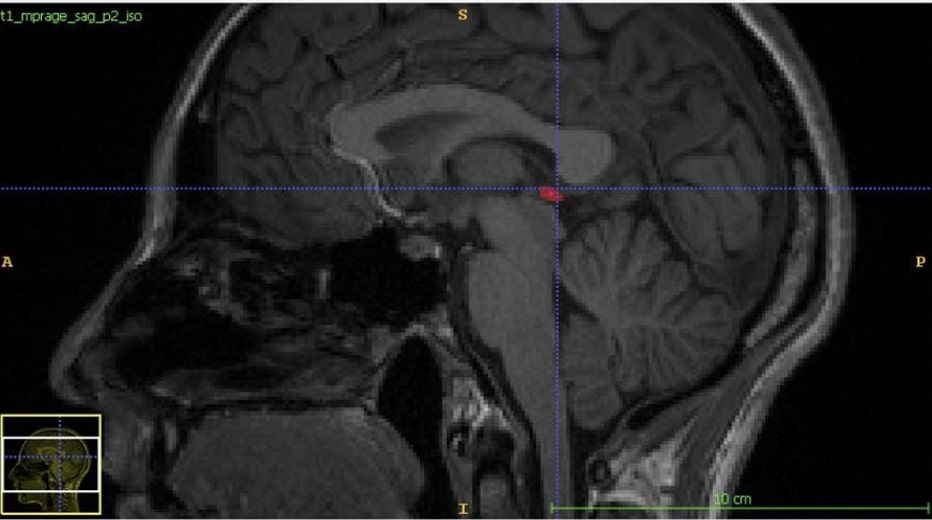
Adolescent idiopathic scoliosis (AIS) is a multifactorial condition and, according to current knowledge, is caused by the following factors: genetic, neurological and skeletal growth abnormalities, histological variables, including changes in muscle fiber proportion and nuclear structure, metabolic and hormonal disorders, vestibular dysfunction, and changes in platelet microarchitecture. Posture and gravity are less important in the development of scoliosis than previously assumed. Batın et al. (2023) were able to demonstrate that pineal gland size was significantly reduced in idiopathic juvenile scoliosis. Melatonin is an important marker for spinal growth and bone mineralization. Melatonin production is thought to be directly proportional to pineal gland volume. The study group and the control group each included 26 patients who met the inclusion criteria. For the radiological examinations, X-rays and MRI of the pineal glands were used. The distribution of age, sex, Risser grading for radiological skeletal development, and sexual maturity according to Tanner staging were consistent and not statistically significant between the groups. Results: When evaluating pineal gland volumes of cases by age, it was found that the adolescent idiopathic scoliosis group had significantly reduced pineal gland volumes in all age groups. Pineal gland volume was 38.1% lower compared with the control group. Adolescent idiopathic scoliosis patients aged 13 years showed the lowest pineal gland volume (77.2 ± 13.86 mm3), while patients aged 15 years had the highest volume (97.9 ± 16.47 mm3).
Batın S, Ekinci Y, Gürbüz K, Payas A, Kurtoğlu E, Uçar İ, Seber T, Arık M, Yılmaz H, Unur E. The role of pineal gland volume in the development of scoliosis. Eur Spine J. 2023 Jan;32(1):181-189.
https://pubmed.ncbi.nlm.nih.gov/36374335/
Osteopathic approach to the pineal gland; see: Liem T. Craniosacral Osteopathy, 2018; 7th expanded ed. Thieme, Stuttgart.
https://www.amazon.de/Kraniosakrale-Osteopathie-Ein-praktisches-Lehrbuch/dp/3132404551