Text: Inge Behrens – Expert advice: Torsten Liem, Normen Wolke. An article from “naturlich gesund und munter”, issue 6/25.
Few complementary therapies are as popular as osteopathy. Instead of using expensive equipment, osteopaths rely on just one tool: their fingers. With them, he “listens” to what is happening in the body and triggers impulses for self-healing. But what exactly does he do? And what conditions can osteopathic treatment help with?
Even the most conscientious doctor sometimes reaches their limits. If a patient complains of severe neck and back pain or movement disorders and no cause can be found using imaging procedures, the orthopaedic surgeon is at the end of his medical tether. If a baby cries incessantly, a pediatrician is often just as helpless and helpless as the mother. And in the case of cardiac arrhythmia, cardiologists sometimes don’t know what to do either.
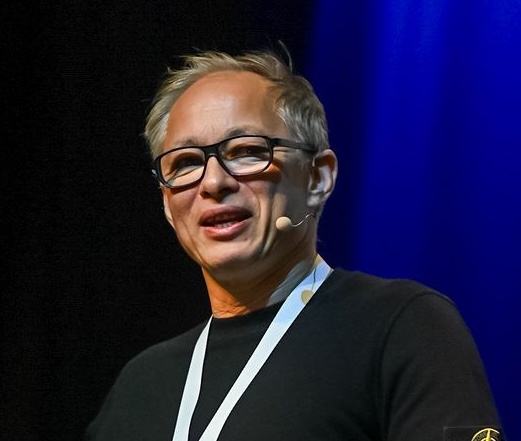
“Why don’t you go to an osteopath?” is often the recommendation. In fact, many Germans have already done so: according to a Forsa study from 2024, 31% of respondents or their child had undergone osteopathic treatment at least once, which corresponds to almost 20 million Germans. Three quarters of those surveyed stated that they were satisfied or very satisfied with the treatment. This shows that osteopathy has arrived in the population, says osteopath Torsten Liem, founder of the Osteopathy School Germany (OSD) in Hamburg. Nevertheless, many people still find it a mystery what an osteopath does. Some believe that he sends healing energy through the body – similar to Reiki – because it sometimes seems as if the osteopath does nothing more than place his hand on a part of the body. Others believe that he works chiropractically and releases joint blockages. While the first assumption is simply wrong, the second is true, but falls far too short. This is because this medicine, which looks at the person as a whole, combines many different approaches. “Chiropractic is just one of many methods from a large toolbox that an osteopath can use,” clarifies Torsten Liem.
Because everything is connected to everything else
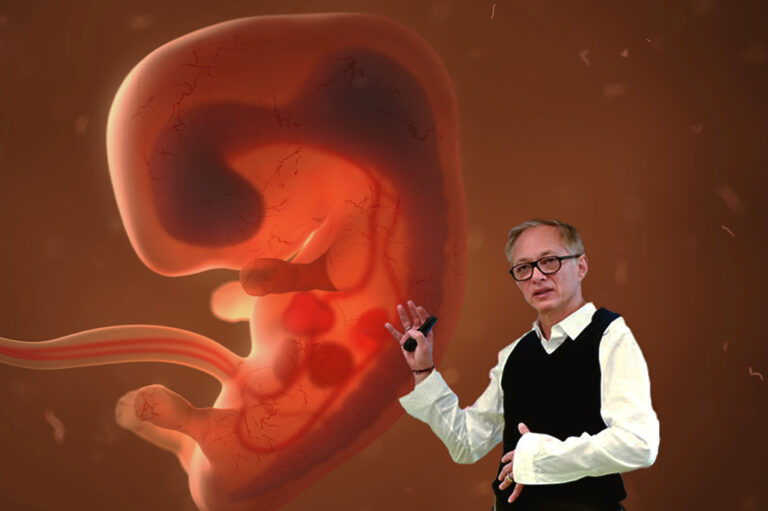
The term osteopathy is made up of the ancient Greek words osteon = bone and pathos = suffering. The American Andrew Taylor Still (1828-1917), who developed the therapy method, gave it this name. Even as a child, he wanted to understand how movement worked and therefore carried many different animal bones in his trouser pocket, which he repeatedly felt (for more on the “clever minds of osteopathy”, see box). But even though osteopathy literally means “bone disease”, an osteopath is by no means only concerned with the 200 or so bones in the human body. The term “bone” is representative of the entire body tissue, as the osteopath also treats the muscles, blood vessels, ligaments and tendons, soft connective tissue and even the organs.
All these structures are connected by fascia and body fluids, from the cerebrospinal fluid (CSF) to the lymph and blood. Fascia is a fibrous, collagen-like, whitish connective tissue that runs through the entire organism like a network and envelops every structure – whether joints or organs, ligaments, muscles or membranes. They make movement possible in the first place and also keep the organs in place.
Just as a minimal touch sets a spider’s web in motion, a body fascia can transmit changes and thus trigger complaints elsewhere. A misalignment of the foot can therefore cause neck or hip pain, for example. “When joints become misaligned, forces are transferred uneconomically. If the joint is already damaged, it can no longer do this extra work and the overload leads to strain, pain or loss of function elsewhere,” explains Berlin osteopath Normen Wolke. The movement and function of the organs can also change and cause pain in the back or elsewhere via the fascial network. This is because the organs are connected to the torso wall via these connective tissue sheaths and are suspended from the spine.
Body fluids also play a major role in osteopathy. Before the therapists release blockages, they feel the subtle movement of the cerebrospinal fluid that constantly flows between the skull and sacrum, as they assume that this rhythm affects the whole body.
The entire body is “read”
Because for osteopaths everything is always connected to everything else, they take a broad view of what is happening in the body. “We try to understand the mechanisms of action between the individual systems,” says Torsten Liem. From an osteopath’s point of view, all physiological processes and systems influence the bony and fascial structures of the body. These include posture and movement, respiration and the cardiovascular system, metabolism, the immune and hormonal systems as well as the nervous system with the brain, sensory organs and the autonomic nervous system.
To find out whether one of these five systems is imbalanced, an osteopath begins an inspection as soon as a patient walks through the door. According to Liem’s experience, adaptation reactions are not only visible in the tissue, but also in facial expressions, posture, gestures, gait and, last but not least, breathing and speech. “I therefore look at a patient’s gait and stride length, how fluidly and how well coordinated they move, whether they seek and maintain eye contact and whether their breathing is regular.” Torsten Liem and Christine Tsolodimos write in their latest joint publication “Das Osteopathie-Selbsthilfe-Buch” (Trias Verlag) that the ability to “read” this interplay is crucial for the quality of subsequent osteopathic treatment.
In the subsequent consultation, the osteopath will inquire about complaints and ask the patient about their lifestyle, i.e. diet and exercise habits, health-promoting factors and resources, as well as about operations, medical history and psychological stress. Disease-causing factors from the environment are also taken into account. Whether pollutants, lack of exercise, an unhealthy diet or psychological problems, whether too much or too little sun – all these factors can put a strain on an organism.
“The trigger for an ailment almost always comes from the patient’s context,” Liem is convinced. The body is very adaptable and is able to regulate physiological bodily functions for a long time so that they remain in balance. But at a certain point, the organism loses its ability to self-regulate and chronic stress leads to illness, discomfort or even premature ageing.
After this preparatory discussion, the osteopath asks about active and passive movement patterns and, for example, asks a patient suffering from back pain in the lumbar region to bend forwards and backwards. Finally, he examines how well a limb, such as a thigh, can be bent passively, whether nerves can be stretched and whether reflex zones can be felt or whether there are asymmetries.
Every fabric tells a story
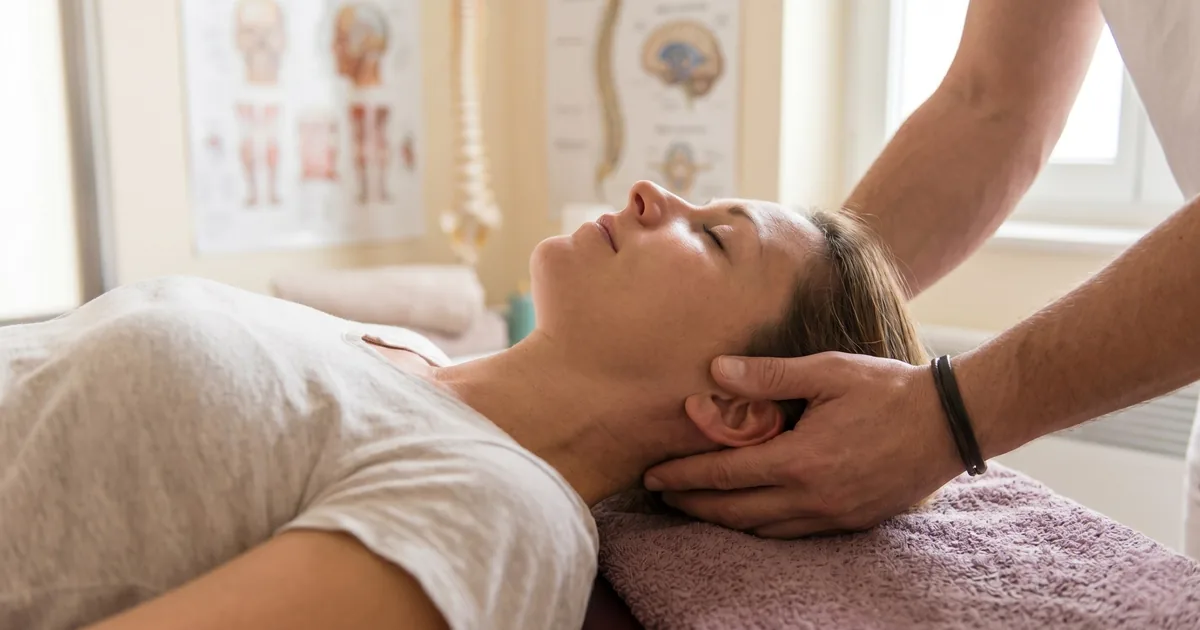
The decisive clues are provided by the body tissue itself. The osteopath uses only one tool for both diagnosis and treatment: his hands. This is because every tissue has its own story to tell. To understand it, the osteopath virtually “listens” with his fingers. Like a detective, he feels around for the cause of the pain or the movement or functional disorder. “The hand is like a lamp that makes the body appear permeable to the practitioner: the skin, muscles, bones, vessels, nerves and organs,” says Torsten Liem, explaining this process, which may seem mysterious to outsiders. The trick is to be able to distinguish between healthy and dysfunctional tissue when palpating. The fingers not only detect too much or too little tension, but also tissue changes such as a lack of elasticity and mobility, asymmetries or sensitivity to pressure. Osteopaths call this careful palpation of body structures “palpation”.
The subsequent treatment can feed or change the diagnosis made. “While I’m carrying out a treatment, I’m constantly having a dialog with the tissue and the person as a whole,” explains Liem. In this sense, the osteopath is a relationship therapist. “I always feel at the same time how the body reacts to the technique at the treated site. Does the patient suddenly breathe faster, frown or does the tissue I am treating change?”
Effectiveness put to the test
The Osteopathy Research Institute is currently investigating the effectiveness of psychosomatic osteopathy, in which patients are more actively involved in the treatment. 200 osteopaths are involved in the study. In the field of pediatric osteopathy, systematic reviews prove that osteopathy is effective, at least for crying children. It is particularly important to recognize and treat dysfunctional movement patterns or reflex patterns in babies and toddlers at an early stage. Other studies have shown that osteopathic treatments can help with anxiety and stress disorders as well as depression. A 2021 study also demonstrated the positive effects on non-specific back and neck pain. A study in which patients received osteopathic treatment before and after bypass surgery and heart rate variability was measured showed that osteopathy can also be used very well alongside conventional medical treatment and have a positive influence on it.
Psychosomatic osteopathy
Representatives of this still young branch of therapy, founded by Hamburg osteopath Torsten Liem, see the body and soul as a deeply interwoven unit and assume, for example, that functional disorders of the tissues are reflected in certain patterns of consciousness and vice versa. They attribute a central role in the healing process to the patient’s awareness, attitude, behavior and individual potential to contribute to their own recovery. As a result, the patient plays a more active role in this treatment than is usual in osteopathy.
Osteopathy: help for self-help
The image of the body, in which everything is constantly in motion and interrelated, was developed in the middle of the last century by the country doctor Andrew Taylor Still, the man with the bones in his pocket. He formulated the principles of osteopathy and transferred its principles and practices into a completely new medical system. Over the years, three different branches of osteopathy have developed from this: While parietal osteopathy is primarily dedicated to disorders of the musculoskeletal system, i.e. the bones and joints, visceral osteopathy deals with the internal organs and the body cavity equipped with connective tissue. Craniosacral osteopathy, on the other hand, relates to the tension of the membranes in the head and spinal cord area and focuses on the skull, spinal cord, sacrum and deep membranes of the brain, including the fluid levels with cerebrospinal fluid.
Even today, Andrew Taylor Still’s philosophical principle that the human body has the power to heal itself still applies in osteopathy. It often only takes a few gentle manual impulses to mobilize the body’s self-healing powers. An osteopath learns around 3,000 different manipulations and methods during several years of training. Some techniques are craniosacral, some are biomechanically structural and others are biodynamic or visceral. There are special techniques for treating scar tissue as well as muscle points and pain-sensitive points – so-called tender points – while other techniques are used for movement disorders or to stretch fascia. But they all serve the same goal: to restore the freedom of the tissue.
Berlin-based osteopath Normen Wolke explains what this means in practice using the example of a 45-year-old patient who had been experiencing pain in his forefoot while jogging for three months when he began treatment. A medical history revealed that the patient had had his appendix removed 15 years ago. Palpatory examination of the bony structures and organs in the inner part of the right pelvis revealed that the scar had grown together with the beginning of the colon. Both the sacroiliac joint and the hip joint were somewhat restricted as a result, which had led to overloading and discomfort in the forefoot. Treating the visceral structures twice, massaging the fused scar and mobilizing the hip joint had the desired effect. After three weeks, the patient was able to jog again without pain.
Osteopath, soon to be a recognized medical profession?
From the very beginning, osteopathy has seen itself not only as an art of healing, but also as a philosophy and a science. However, whether this alternative medicine can really help, let alone heal, is scientifically controversial. Critics complain that the research and evidence base is inadequate. Although there are some recent studies, these are mostly very small.
Although osteopathy is not recognized as a medical profession and its effectiveness has not been sufficiently researched, some private and statutory health insurance companies subsidize osteopathic treatment. Torsten Liem criticizes that the market is incredibly unregulated. As the term is not protected, anyone can call themselves an osteopath. For example, training courses in pediatric osteopathy are offered by people who do not have a degree in osteopathy themselves, reports Liem. To counteract this, he founded his osteopathy school back in 1999, which now has teaching practices in Hamburg, Berlin and Munich. Although he has a master’s degree in osteopathy and a master’s degree in pediatric osteopathy, he also had to complete training as a non-medical practitioner in order to obtain a state healing license. So far, only doctors have been exempt from this requirement.
But this could soon change: The coalition agreement of the current federal government states that osteopathy is to be regulated by professional law. In terms of quality assurance, Liem believes it is important that the legal framework for his profession is finally defined and training is also to be structured. Perhaps even more patients will then put their trust in the special manual skills of osteopaths, those “thinking, feeling, knowing fingers”. They may not be able to work magic, but sometimes three to five treatments are enough to noticeably alleviate even long-standing complaints.
Smart minds behind osteopathy
Osteopathy is not a fixed medical system. It has been constantly evolving since its beginnings in the middle of the last century:
- Andrew Taylor Still (1828-1917) is considered the founder of osteopathy. He made his first osteopathic discovery at the age of ten. At that time, he wanted to swing on a rope that he had tied to a tree. Because he had a headache, he lowered the rope until it was dangling just 25 centimetres above the ground, threw a sheet over the loop, stretched out on the ground for a long time and rested his neck on the movable cushion. A short time later, he felt better. This experience had a lasting effect on the doctor. He began to perfect his knowledge of functional anatomy and developed a comprehensive concept, osteopathy.
- William Garner Sutherland (1873-1954), an American and student of Andrew Still, expanded the concept of osteopathy to include craniosacral therapy. He coined the phrase: “The osteopath is a person who works with feeling, seeing, thinking and knowing hands.
- Jim Jealous (1943-2021), also from the USA, developed biodynamic osteopathy, which in turn is based on craniosacral therapy. In addition to the cerebrospinal fluid (CSF), he also included the lymph and blood in the treatment because he assumed that complaints can occur wherever fluid is not in motion.
- Jean-Pierre Barral (1944), French osteopath, is the founder of visceral therapy and one of the most famous representatives of osteopathy. His theory: organs must be able to move freely in order to function properly. If the organ sheaths are fused with the surrounding tissue or organs are scarred after surgery, this can not only have far-reaching consequences for the body, but can also change the emotions. In years of research and clinical work, he has demonstrated the connections between organs and joints, such as the liver and right shoulder or the bladder and hip joint. Visceral manipulation improves an organ’s own movement, blood circulation and innervation, while at the same time releasing the tension in the connective tissue that is transferred to the muscles and bones.