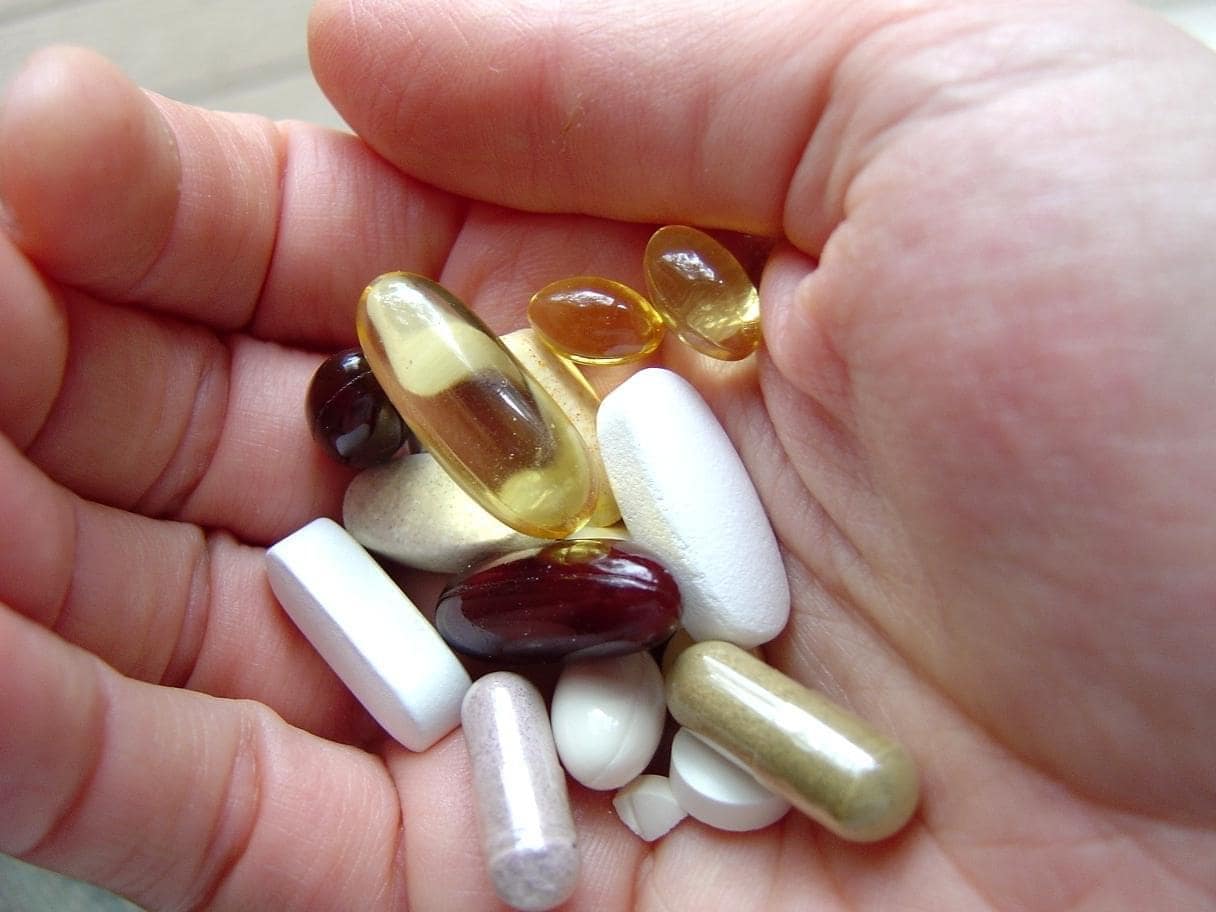
What exactly are dietary supplements?Dietary supplements are products manufactured in concentrated form from nutrients or other substances with a nutritional or physiological effect. What kind of oversight are dietary supplements subject to?Dietary supplements are classified as food products and, unlike pharmaceuticals, do not undergo any licensing process. Only registration with the Federal Office of Consumer Protection and Food Safety (BVL) is mandatory. Manufacturers are solely responsible for the safety of dietary supplements (www.bfr.bund.de; accessed June 30, 2021).Are there standards for multivitamin or multimineral preparations?There is no standard or official definition for a multivitamin or multimineral preparation—for example, which nutrients it must contain and in what quantities. Therefore, the term can refer to products with very different compositions and properties (Yetley 2007). Manufacturers alone determine the dose, composition, and the chemical compounds of vitamins, minerals, and other ingredients used in their multivitamin/multimineral preparations. Consequently, consumers are left to their own devices when choosing dietary supplements.Are there reasons that might support taking dietary supplements?Arguments in favor of potential supplementation include the fact that industrial production has changed not only our diet but also the nutrient and vital substance content in plants due to depleted soils, air pollution, rapid growth, and long storage periods. Genetic modifications, the use of pesticides, heavy metal contamination, and atmospheric changes affect the active ingredient content of plants. Furthermore, preparation methods can lead to potential vitamin loss. In many countries, vitamin deficiencies exist fundamentally due to varying levels of sunlight. Deficiencies could also arise from junk food diets, processed products, excessive grain consumption, sugary drinks, etc. However, according to studies, dietary supplements are often taken by individuals who already maintain a nutrient-rich diet, which can increase the likelihood of overdose and excessive nutrient intake.Is it only about your health?I was surprised by the amount of revenue generated by dietary supplements. They represent a major economic market. Revenue from dietary supplements has increased by an average of 6% per year over the past five years; in Germany, revenue reached nearly 2.1 billion euros in 2018 (IQVIA and Statista 2020) and, according to the IQVIA information service, approximately 2.69 billion euros in 2021. If manufacturers are to be believed, these preparations are an indispensable contribution to healthcare. The extent to which their intake is actually useful is a matter of controversy, with evidence to the contrary prevailing. Is there transparency regarding financial interests in dietary supplement consultations?On several occasions, I have witnessed how dietary supplements were recommended in workshops and that speakers received a share of the profits from the sale of certain preparations without making this transparent. I was particularly negatively surprised by the public relations work of supplement companies, where seemingly “neutral” health consultants and “scientists”—without disclosing that they are employed by, freelance for, share in the profits of, or hold stakes in these companies—provide “advice” on health behavior while incidentally trying to sell their preparations. From my perspective, customers are being enticed into making a purchase here. In scientific studies, such conflicts of interest would have to be made public. However, this is not the case in courses, on websites, in podcasts, or in YouTube videos. Furthermore, in many practices, the profit sharing for therapists who motivate patients to order supplements from companies or buy them directly from the practice often ranges between 10% and over 30%. If you are encouraged to buy certain preparations, ask your therapists if they receive a percentage of the sale. For a short time, I was motivated to try many supplements. However, due to health considerations, I have “detoxed” myself from them again. Are there links between dietary supplement intake, other addictions, and personality traits?The intake of dietary supplements can lead to an illusory sense of invulnerability and reduce self-regulation when smoking (Chiou et al. 2011). Protein/amino acid consumption among soldiers was associated with the following personality traits (Hatch et al. 2019): experience seeking (p < 0.001), boredom susceptibility (p < 0.001), thrill seeking (p < 0.001), disinhibition (p < 0.01), novelty (p < 0.001), and intensity (p < 0.001). Should you consider taking dietary supplements, such as a multivitamin or multimineral preparation, the following should be noted:
- Pay attention to the dosage
Extreme intake of individual vitamins or minerals should be avoided, or only occur if medically necessary, as harmful effects are possible in the event of an overdose—for example, with the regular daily intake of several grams of vitamin C or high intake of fat-soluble vitamins.
- GMP label
Dietary supplements should at least carry the GMP label. GMP stands for “Good Manufacturing Practice.” This is the part of quality assurance that ensures products are consistently produced and controlled according to the quality standards appropriate to their intended use and as required by the marketing authorization or product specification. GMP covers both production and quality control.[311]
- “Non-GMO” designation
Dietary supplements should not contain genetically modified ingredients. Therefore, look for the “non-GMO” designation. GMO stands for genetically modified organism.
- TOTOX value
By eating sufficient fish, crustaceans, shellfish, algae, etc., the intake of fish oils is not necessary. However, if fish oils are to be supplemented, attention should be paid to the TOTOX value—oxidation value—of the respective preparations. The TOTOX value indicates the degree of oxidation of the oil. Fish oils should never smell or taste unpleasant. A high-quality fish oil has values around 10. Excellent manufacturers are even below that. Values from 26 onwards are considered critical in the EU. Furthermore, when it comes to dietary supplements, attention must be paid to the content of the active ingredient, the composition, and the chemical compounds. The most expensive preparation is not necessarily the best. Further information can be found in my new publication: The Osteopathy Self-Help Book.