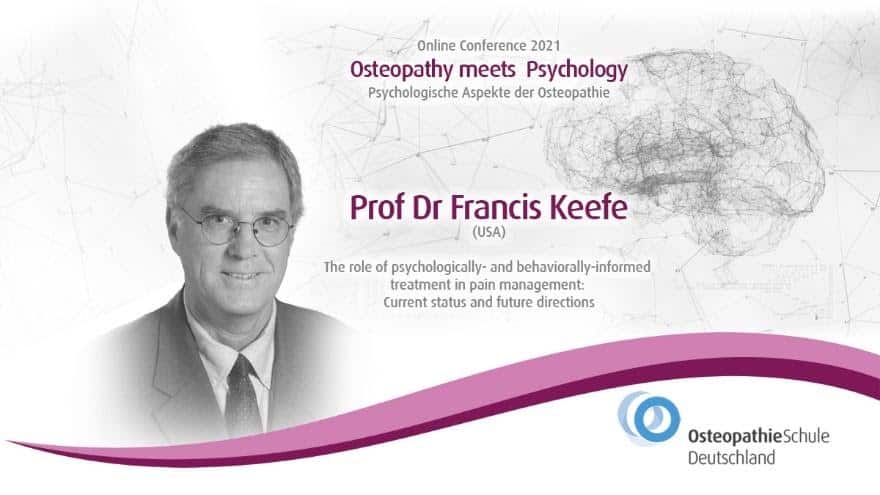
Prof Dr Francis Keefe is a Professor in the Department of Psychiatry and Behavioral Sciences at Duke University in Durham, North Carolina, as well as a Professor in Anesthesiology and Professor of Medicine, Director of the Duke Pain Prevention and Treatment Research Program, which focuses on developing new and more effective methods for assessing and treating patients with acute and chronic pain. He is also the Editor-in-Chief of PAIN, the leading journal in the field of pain research, as well as the author of several books and over 600 publications. On November 19th, Dr Austin, together with Assoc Prof Dr Rebecca Shelby, will give a lecture at our Online Conference 2021. Learn about the rationale for treating pain from a behavioral and psychological perspective and how to educate patients about why these approaches are appropriate and helpful. REGISTER NOWhttps://web.cvent.com/event/e52b2684-e9a5-4ef1-9e61-f3eb9bc1f042/summaryLearn more about Prof Dr Francis Keefe in our interview:HOW DID YOUR THERAPEUTIC INTERESTS INFORM YOUR RESEARCH INTERESTS?Early in my career I was working a lot with people having chronic pain. I was struck by the variations in how people coped with their pain. Some seem to cope well and remain active and engaged with life despite persistent pain. Others were overwhelmed by pain and developed a sedentary and limited lifestyle. I began to systematically study pain coping and, based on the information from our studies, developed psychological treatment programs to enhance patients’ abilities to use coping strategies to better manage pain.WHAT COULD BE SOME CLINICALLY RELEVANT OUTCOMES FOR OSTEOPATHY FROM YOUR RESEARCH?Our interventions not only have increased both the use and perceived effectiveness of patients’ pain coping strategies, but they also have produced improvements in pain, disability, depression, anxiety, and psychological distress.YOU ARE INVOLVED IN INCREDIBLY MANY PUBLICATIONS AND RESEARCH PAPERS. WHICH ONE IS THE MOST IMPORTANT FOR YOU AND WHY? This is a very difficult question to answer. I think that several of the studies we’ve done helping patients manage pain at end of life or pain in the context of advanced disease are particularly important. I believe this work has had a heuristic effect leading others to focus more on working with these populations of patients.AT OUR ONLINE CONFERENCE YOU WILL TALK ABOUT “THE ROLE OF PSYCHOLOGICALLY- AND BEHAVIORALLY-INFORMED TREATMENT IN PAIN MANAGEMENT: CURRENT STATUS AND FUTURE DIRECTIONS”. WHAT CAN THE PARTICIPANTS EXPECT TO LEARN FROM YOUR LECTURE? Three things in particular. First, they can learn about the rationale for treating pain from a behavioral and psychological perspective and how to educate patients about why these approaches are appropriate and helpful. Second, they will become more familiar with a range of behavioral/psychological treatment protocols including protocols for training in pain coping skills, mindfulness-based approaches, and couples-based approaches. Finally, they can become more aware of important current research initiatives in this area such as the use of telemedicine to deliver treatment and how these approaches can be used to help patients reduce the intake of pain medications. YOU ARE EDITOR-IN-CHIEF OF PAIN, THE LEADING JOURNAL IN THE FIELD OF PAIN RESEARCH. WHICH ARTICLE WAS THE MOST IMPORTANT FOR YOU IN THE LAST 12 MONTHS AND WHY? We published an important series of papers that critically evaluated the basic science and clinical research literature on the use of cannabis/cannabinoids for pain management. It represents the most rigorous analysis of this literature to date.MORE INFORMATION ABOUT OUR ONLINE CONFERENCE 2021 YOU CAN FIND ON OUR WEBSITEhttps://www.osteopathie-schule.de/online-conference-2021/
English Version
DO YOU KNOW PROF DR FRANCIS KEEFE?The role of psychologically- and behaviorally-informed treatment in pain management: Current status and future directionsProf Dr Francis Keefe is a Professor in the Department of Psychiatry and Behavioral Sciences at Duke University in Durham, North Carolina, as well as a Professor in Anesthesiology and Professor of Medicine, Director of the Duke Pain Prevention and Treatment Research Program, which focuses on developing new and more effective methods for assessing and treating patients with acute and chronic pain. He is also the Editor-in-Chief of PAIN, the leading journal in the field of pain research, as well as the author of several books and over 600 publications.On November 19th, together with Assoc Prof Dr Rebecca Shelby, Dr Hilary Abbey will give a lecture at our ONLINE CONFERENCE 2021. Learn about the rationale for treating pain from a behavioral and psychological perspective and how to educate patients about why these approaches are appropriate and helpful. JOIN NOWhttps://web.cvent.com/event/e52b2684-e9a5-4ef1-9e61-f3eb9bc1f042/summaryLearn more about Prof Dr Francis Keefe in our interview:HOW DID YOUR THERAPEUTIC INTERESTS INFORM YOUR RESEARCH INTERESTS?Early in my career I was working a lot with people having chronic pain. I was struck by the variations in how people coped with their pain. Some seem to cope well and remain active and engaged with life despite persistent pain. Others were overwhelmed by pain and developed a sedentary and limited lifestyle. I began to systematically study pain coping and, based on the information from our studies, developed psychological treatment programs to enhance patients’ abilities to use coping strategies to better manage pain.WHAT COULD BE SOME CLINICALLY RELEVANT OUTCOMES FOR OSTEOPATHS FROM YOUR RESEARCH?Our interventions not only have increased both the use and perceived effectiveness of patients’ pain coping strategies, but they also have produced improvements in pain, disability, depression, anxiety, and psychological distress.YOU ARE INVOLVED IN INCREDIBLY MANY PUBLICATIONS AND RESEARCH PAPERS. WHICH ONE IS THE MOST IMPORTANT FOR YOU AND WHY? This is a very difficult question to answer. I think that several of the studies we’ve done helping patients manage pain at end of life or pain in the context of advanced disease are particularly important. I believe this work has had a heuristic effect leading others to focus more on working with these populations of patients.AT OUR ONLINE CONFERENCE YOU WILL TALK ABOUT “THE ROLE OF PSYCHOLOGICALLY- AND BEHAVIORALLY-INFORMED TREATMENT IN PAIN MANAGEMENT: CURRENT STATUS AND FUTURE DIRECTIONS”. WHAT CAN THE PARTICIPANTS EXPECT TO LEARN FROM YOUR LECTURE? Three things in particular. First, they can learn about the rationale for treating pain from a behavioral and psychological perspective and how to educate patients about why these approaches are appropriate and helpful. Second, they will become more familiar with a range of behavioral/psychological treatment protocols including protocols for training in pain coping skills, mindfulness-based approaches, and couples-based approaches. Finally, they can become more aware of important current research initiatives in this area such as the use of telemedicine to deliver treatment and how these approaches can be used to help patients reduce the intake of pain medications.YOU ARE EDITOR-IN-CHIEF OF PAIN, THE LEADING JOURNAL IN THE FIELD OF PAIN RESEARCH. WHICH ARTICLE WAS THE MOST IMPORTANT FOR YOU IN THE LAST 12 MONTHS AND WHY? We published an important series of papers that critically evaluated the basic science and clinical research literature on the use of cannabis/cannabinoids for pain management. It represents the most rigorous analysis of this literature to date.MORE INFORMATION ABOUT OUR ONLINE CONFERENCE 2021 YOU CAN FIND ON OUR WEBSITEhttps://www.osteopathie-schule.de/online-conference-2021/