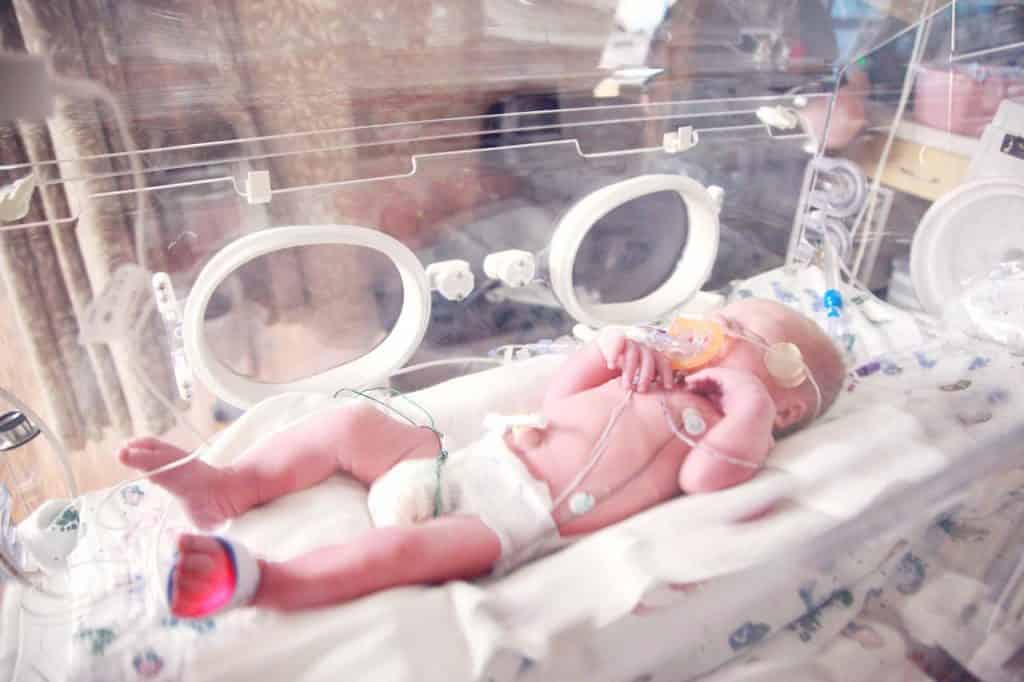
Premature birth (= birth of an infant before completion of the 37th week of gestation) is one of the main determinants of the risk of developing disease later in life (Soon 2012). In addition to the long-term physical and psychological effects, premature births also cause higher economic costs (Beck et al. 2010). Length of stay in neonatal intensive care units is one of the most important clinical outcomes used as a proxy for examining the effectiveness of interventions in infants. This length of stay appears to correlate with gestational age and birth weight: the shorter the gestation, the longer the hospital stays and the higher the risk of morbidity (Bakewell-Sachs et al. 2009). As early as 2013, Cerritelli and colleagues provided preliminary results on a positive effect of OMT in newborns compared to routine medical care in terms of reducing hospitalization days and costs (Cerritelli et al. 2013). This preliminary evidence was reproduced two years later in another randomized study with a larger sample size (n=695). A significant reduction in hospital length of stay of 3.9 days was observed following the application of OMT in premature infants. Furthermore, there were also significant cost reductions compared to standard treatment (Cerritelli et al. 2015). Another study by Pizzolorusso et al. was also able to demonstrate that OMT in premature infants led to a significant reduction in hospital stay (-2.03 days) (Pizzolorusso et al. 2014). The methodological quality of the above-mentioned studies is also rated as good. Osteopathic manipulative treatment also has a positive influence on gastrointestinal function in premature infants as well as on length of hospital stay. This was observed in a prospective, non-randomized cohort study of 350 consecutively born newborns. Those premature infants (n=162) who received OMT in addition to standard treatment showed a 55% reduction in gastrointestinal symptoms as well as a reduction in hospital stay of more than 75% (Pizzolorusso et al. 2014). The available data from studies on premature infants therefore provide robust evidence that OMT is effective in reducing the length of hospital stay of treated infants and is furthermore efficient in reducing costs. In the future, cost-effectiveness analyses should therefore also be included in new study designs in order to establish OMT in neonatal health services (Bagagiolo et al. 2016).
Literature
Bagagiolo D, Didio A, Sbarbaro M, et al. Osteopathic Manipulative Treatment in Pediatric and Neonatal Patients and Disorders: Clinical Considerations and Updated Review of the Existing Literature. Am J Perinatol. 2016;33(11):1050-1054Bakewell-Sachs S, Medoff-Cooper B, Escobar GJ, et al. Infant functional status: the timing of physiologic maturation of premature infants. Pediatrics. 2009;123(5):e878-e886Beck S, Wojdyla D, Say L, et al. The worldwide incidence of preterm birth: a systematic review of maternal mortality and morbidity. Bull World Health Organ. 2010;88:31-38Cerritelli F, Pizzolorusso G, Ciardelli F, et al. Effect of osteopathic manipulative treatment on length of stay in a population of preterm infants: A randomized controlled trial. BMC Pediatr. 2013;13(1)Cerritelli F, Pizzolorusso G, Renzetti C, et al. A multicenter, randomized, controlled trial of osteopathic manipulative treatment on preterms. PLoS One. 2015;10(5):1-12Pizzolorusso G, Cerritelli F, Accorsi A, et al. The effect of optimally timed osteopathic manipulative treatment on length of hospital stay in moderate and late preterm infants: Results from a RCT. Evidence-based Complement Altern Med. 2014;2014Soon BT. The global action report on preterm birth. Geneva World Heal Organ. Published online 2012