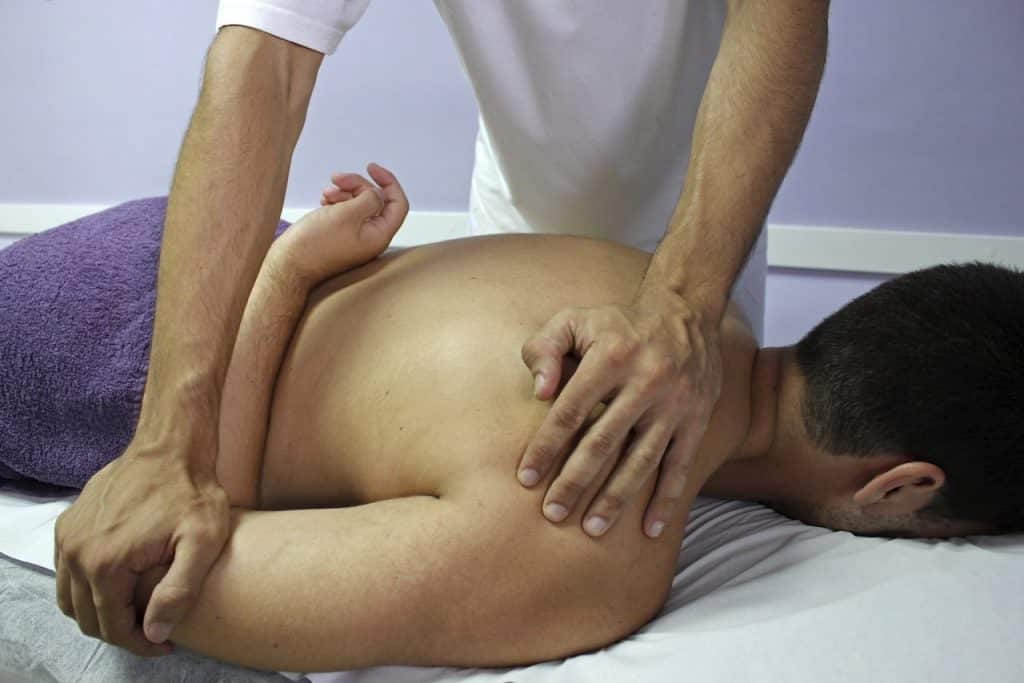
Osteopathic Manipulative Therapy (OMT) is the overarching term for all osteopathic techniques. This includes myofascial release, craniosacral treatment, High-Velocity-Low-Amplitude (HVLA) manipulations, Minimal Leverage Manipulations, Balanced Ligamentous Tension (BLT), Muscle Energy Techniques, Biodynamics, Strain/Counterstrain, visceral manipulation, etc. (Cerritelli et al. 2011). This broad spectrum of manual techniques allows for an individual choice of the most suitable technique to optimize function and alleviate pain. According to a national pilot project with standardized data collection in England, patients most frequently present with low back pain (LBP), followed by cervical spine symptoms, pelvic and lumbar pain, head and facial pain, shoulder problems, and painful thoracic spine. They often bring so-called comorbidities (additional, further illnesses), such as hypertension, asthma, or arthritis (Fawkes et al. 2014). Unlike classical conventional medicine, however, osteopathy focuses on promoting general health and always seeks health within the organism, not disease. In addition to manual therapy, the therapeutic conversation and comprehensive case history, which also inquires about biopsychosocial aspects, are central to an osteopathic treatment. Thus, osteopaths support their patients with topics such as establishing and maintaining a healthy lifestyle with sufficient exercise and a healthy diet (Fryer 2017). People with chronic pain and functional limitations also frequently suffer from anxiety and depression, which have a negative impact on social, leisure, and work life. These effects are difficult to explain within the biomedical framework, which is why the biopsychosocial model for chronic pain was developed. It encompasses physical, psychological, educational, and social or work-related influences and attempts to include all facets of the disorder. Derived multidisciplinary interventions are then carried out by a team of professionals from various health sectors. As early as 2015, a high-quality meta-analysis by the Cochrane Collaboration concluded that multidisciplinary biopsychosocial rehabilitation measures are more effective than standard care in reducing pain and dysfunction in people with chronic low back pain.
How do acute and chronic pain differ?
Acute pain is defined as pain of short duration, triggered by noxious (tissue-damaging) stimuli. These include exogenous stimuli (such as extreme heat) and endogenous disturbances (e.g., inflammation), both of which are capable of activating nociceptors and triggering the typical experience of nociceptive pain (Kröner-Herwig 2011). However, pain is not a purely physical experience but a conscious perception modulated by the brain and psyche. Anxiety or a feeling of threat trigger an increased perception of pain in the brain (Moseley Flor 2012). Chronic pain is spoken of when the pain lasts longer than 6 months and no direct cause (such as tissue damage) is discernible as a trigger anymore (Kröner-Herwig 2011). This can occur if the noxious stimulus is so intense or persistent that it leads to a sensitization of the central nervous system (CNS). The spinal cord contains the second neuron of the nociceptive pain pathway, which then leads to higher centers in the brain where the third neuron is located. In long-lasting pain, neuroplastic changes occur in these neurons, leading to hyperexcitability and increased synaptic efficacy. This process is also called central sensitization. This results in exaggerated pain responses to normally non-painful stimuli, even though the original tissue damage from noxious agents has long since healed. Chronic pain thus originates in the CNS (Esmaili et al. 2016). However, in addition to the sensitization process, peripheral noxious agents also play a role in the experience of chronic pain. The brain itself also undergoes restructuring during the chronification of pain: Activity in pain-related brain regions such as the insula, anterior cingulate gyrus, and thalamus decreases, and emotion-based brain circuits involving the medial prefrontal cortex, amygdala, and basal ganglia become stronger (Hashmi et al. 2013). This can lead to disturbances in proprioception (perception of the body in space) and motor control (Moseley Flor 2012). Furthermore, psychosocial factors also play an important role in the transition from acute to chronic pain (Shaw et al. 2016).
How does osteopathy view chronic pain?
Research in recent years has shown that the central nervous system and the psyche influence chronic pain, while evidence for tissue-related, posture-related, or biomechanical causes is lacking. Osteopathy developed at a time when the biomedical paradigm was still predominant, which we still notice today in the use of the term “osteopathic lesion.” More information on the origins of osteopathy can be found here: XXX (Insert link to article on “Osteopathic Lesion”) Many osteopathy schools strictly follow the traditional concepts of Still, Littlejohn Co., while more modern institutions comprehensively question and further develop the old concepts in light of current scientific knowledge and also view osteopathy from an evidence-based perspective. Old-school osteopaths view manipulative techniques as a correction of altered biomechanics and restricted movement and explain a person’s pain more in pathological and biomechanical terms than in neurological or psychosocial terms. However, if the practitioner is aware that pain and movement restrictions in most people are associated with a combination of biological and psychosocial causes of varying dominance, they can develop a treatment plan that considers the physical and psychosocial components. Furthermore, osteopaths should acknowledge that chronic pain can also be the product of the long process of central sensitization of the CNS and no longer have a tissue or nociceptive origin.
Which mechanisms are responsible for the improvement of somatic pain and functional limitations after osteopathic treatment?
Osteopathic treatment can influence a variety of biological and psychosocial factors to help patients with acute or chronic somatic pain and movement restrictions. The effect of an osteopathic treatment can be described in three dimensions (Lederman 2005):
- Tissue Mechanisms
- Promotion of tissue healing, movement, and drainage of tissue fluid
- Neurological Dimension
- Stimulation of ascending, afferent tissue receptors to facilitate sensorimotor integration, interoception, proprioception, and motor control
- Psychological Dimension
- Promoting calm, education, psychological approaches to pain management, improved confidence, and empowerment
All three dimensions are closely interconnected, and a treatment always influences all mentioned areas by bringing about changes in cognition and psychological state. Through the modulation of pain perception, desensitization can occur in the body. Osteopaths can exert a strong positive influence by carefully choosing their language to calm, empower, and convey a positive context to people coming to their practice. Initial small-scale osteopathic studies demonstrate the effect of osteopathic treatment for back and neck pain (Franke et al. 2014, 2015). However, these results still require confirmation through many large RCT studies and meta-analyses to achieve scientific significance. The pain-relieving effect and reduction of pressure pain sensitivity of other manual techniques, such as spinal manipulations, joint treatments, mobilization, and massage, are well documented. There are even studies proving that touch alone can reduce pain. It is believed that the so-called C-fibers, which optimally respond to gentle touch, are responsible for this and play an important role in the effectiveness of manual therapies. The mechanisms responsible for the improvement of chronic pain are likely a combination of short-term tissue mechanisms and longer-term neurological mechanisms that allow the CNS to desensitize stimuli, as well as psychological mechanisms (Fryer 2017).
Literature
Cerritelli F, Carinci F, Pizzolorusso G, et al. Osteopathic manipulation as a complementary treatment for the prevention of cardiac complications: 12-Months follow-up of intima media and blood pressure on a cohort affected by hypertension. J Bodyw Mov Ther. 2011;15(1):68-74Esmaili E, Dahlan HM, Desa MI. Model-driven decision support system for estimating number of ambulances required during earthquake disaster relief operation. J Theor Appl Inf Technol. 2016;90(2):86-94Fawkes CA, Leach CMJ, Mathias S, et al. A profile of osteopathic care in private practices in the United Kingdom: A national pilot using standardised data collection. Man Ther. 2014;19(2):125-130Franke H, Franke J-D, Fryer G. Osteopathic manipulative treatment for nonspecific low back pain: a systematic review and meta-analysis. BMC Musculoskelet Disord. 2014;15(1):1-18Franke H, Franke JD, Fryer G. Osteopathic manipulative treatment for chronic nonspecific neck pain: A systematic review and meta-analysis. Int J Osteopath Med. 2015;18(4):255-267Fryer G. Integrating osteopathic approaches based on biopsychosocial therapeutic mechanisms. Part 1: The mechanisms. Int J Osteopath Med. 2017;25:30-41Hashmi JA, Baliki MN, Huang L, et al. Shape shifting pain: chronification of back pain shifts brain representation from nociceptive to emotional circuits. Brain. 2013;136(9):2751-2768Kröner-Herwig B. Pain as a biopsychosocial phenomenon – an introduction BT – Schmerzpsychotherapie: Grundlagen – Diagnostik – Krankheitsbilder – Behandlung. In: Kröner-Herwig B, Frettlöh J, Klinger R, et al., eds. Springer Berlin Heidelberg; 2011:3-14.Lederman E. The Science Practice of Manual Therapy. Elsevier Health Sciences; 2005Moseley GL, Flor H. Targeting cortical representations in the treatment of chronic pain: a review. Neurorehabil Neural Repair. 2012;26(6):646-652Shaw WS, Hartvigsen J, Woiszwillo MJ, et al. Psychological distress in acute low back pain: a review of measurement scales and levels of distress reported in the first 2 months after pain onset. Arch Phys Med Rehabil. 2016;97(9):1573-1587