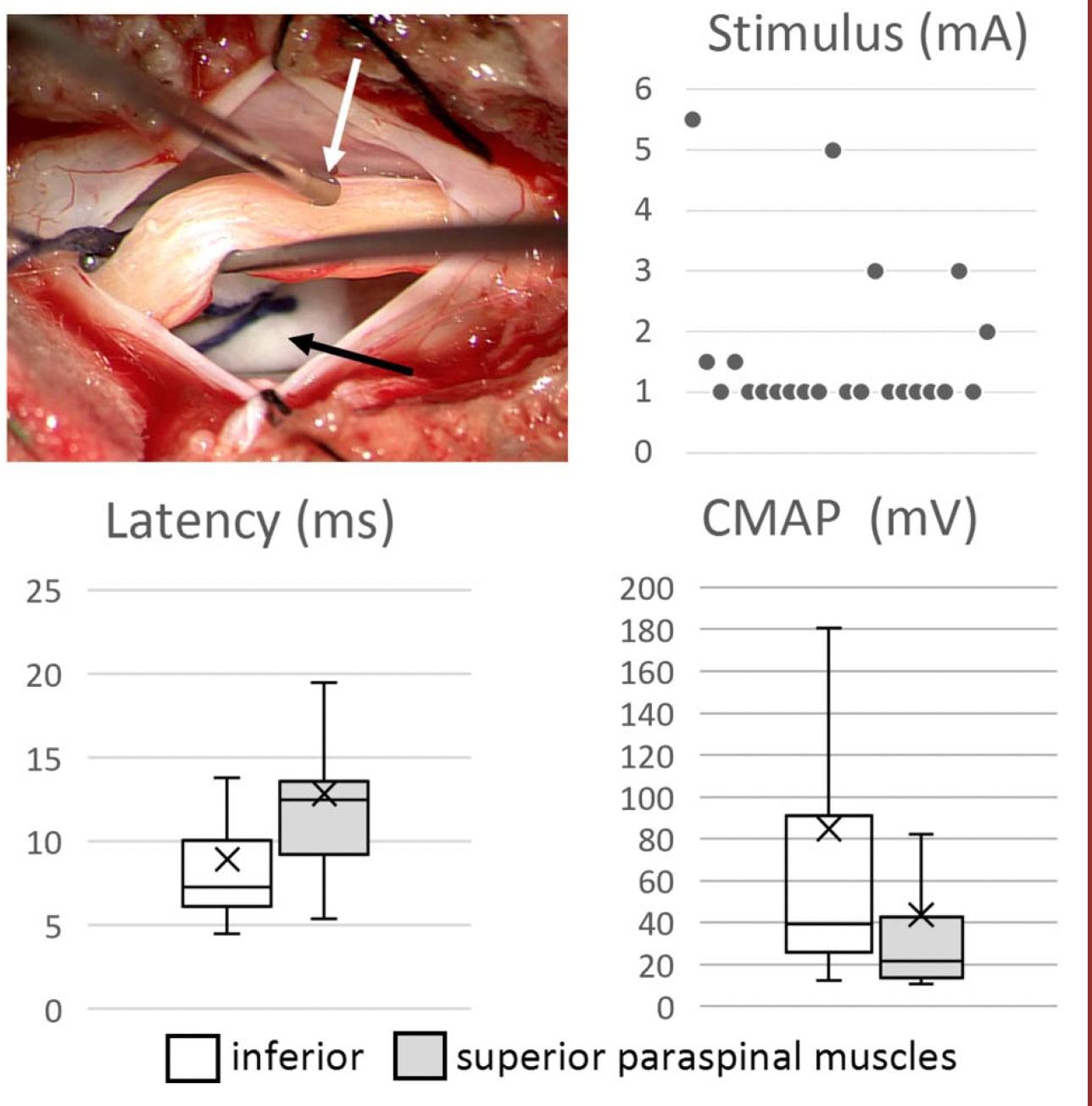
A study by Klinge et al. (2022) used light microscopy to find tiny peripheral nerves that penetrate the pia mater of the FT and enter its fibrous core. Transmission electron microscopy revealed both myelinated (in 8 of 53 patients) and unmyelinated (in 10 of 53 patients) nerve structures. This study was conducted on 53 patients treated during an intraoperative examination regarding tethered cord syndrome. Both nerve endings encapsulated in fibrous tissue and unencapsulated, unmyelinated Schwann cell nerve bundles, i.e., Remak cells, were found. Of practical relevance is that these nerve endings resembled mechanoreceptor and nociceptor structures located in human skin, muscle tendons, and skeletal ligaments. Furthermore, bipolar electrical stimulation of the FT was associated with paraspinal muscle activity connected above and below the spinal segment where the FT was stimulated. For figure: Electrophysiological recordings of the paraspinal muscles: lowest stimulus intensity at which the paraspinal muscles were activated (n = 22), latency between stimulus and muscle response, and compound muscle action potential (CMAP) of the paraspinal muscles. Significantly, the FT not only functions as a proprioceptive element—like other ligamentous structures of the spine—but can also contribute to back pain in spinal diseases. This is clinically relevant for osteopathic practice. Clinically relevant for osteopathic practice: release of the sacrococcygeal joint as well as tension balancing from the coccyx to the epidural space in the lumbosacral transition (Liem 2018). Full technique in this blog post. Source and link to the study: Klinge PM, McElroy A, Leary OP, et al. Not Just an Anchor: The Human Filum Terminale Contains Stretch Sensitive and Nociceptive Nerve Endings and Responds to Electrical Stimulation With Paraspinal Muscle Activation. Neurosurgery. 2022 Oct 1;91(4):618-624.




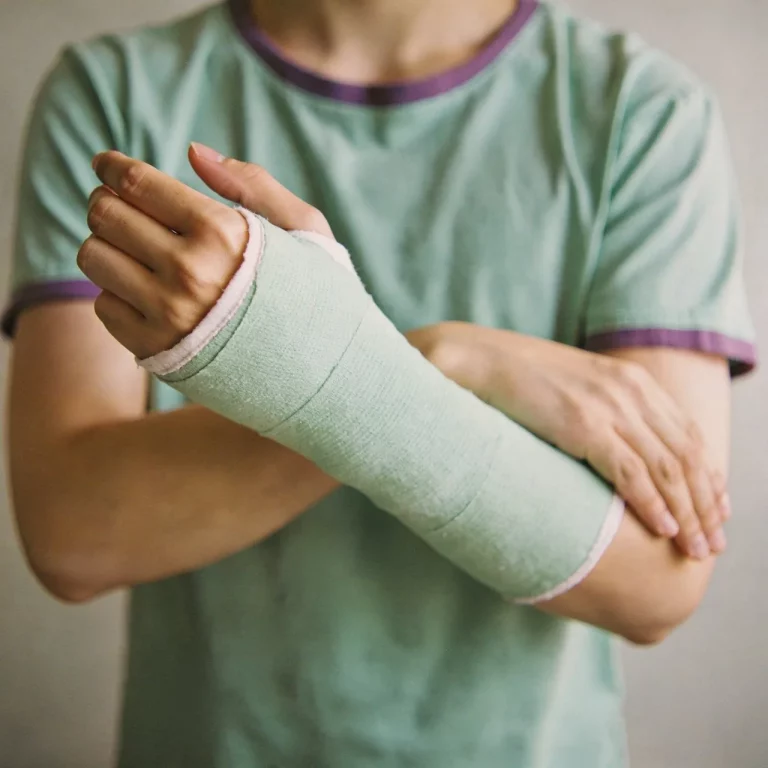
Radial Head Fracture: Osteopathic Treatment Step by Step
Torsten Liem, CEO of Osteopathie Schule Deutschland, is not only an expert in this field but also founded the Osteopathic Research Institute as well as