Christina Lenz interviews Torsten Liem. From Osteopathische Medizin. Vol. 24, Issue 1/2023, pp. 39–42,
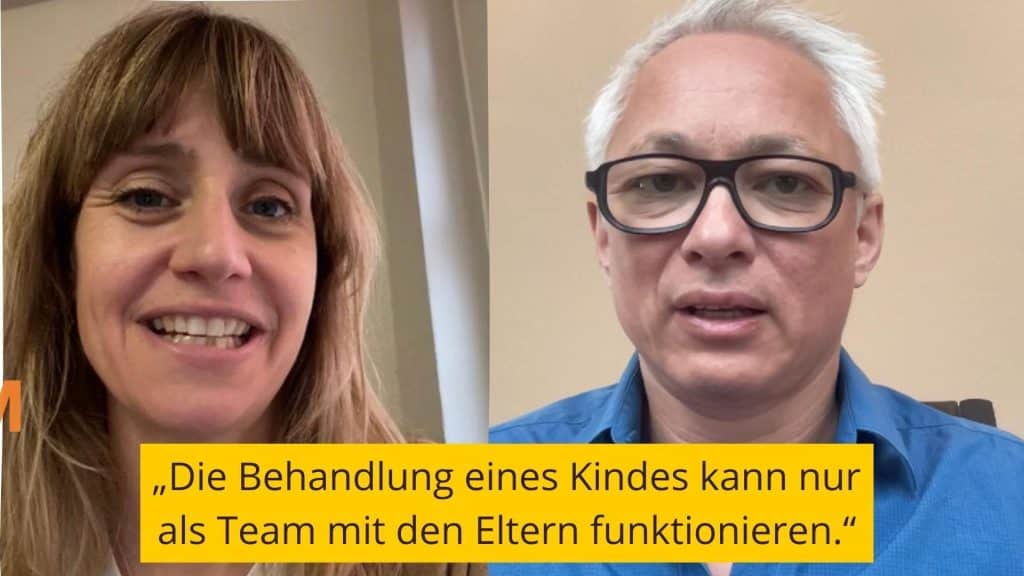
“The treatment of a child can only function as a team with the parents.”
How can pediatric osteopathy be implemented in practice? In this interview, Torsten Liem describes his approaches and specific methodology for treating children and infants. In 2001, Torsten Liem developed a continuing education program and in 2004 an M.Sc. program for the treatment of children, which was first conducted in Germany in 2005, and he is the co-editor of three books on this subject. Christina Lenz (London, OCC) M.Sc. B.Sc. (hons) Ost FHEA conducted the conversation with him on the topic of osteopathy in pediatrics.CL: Could you tell us something about your background in treating children?TL: From the very beginning, many children came to my practice, and I attended numerous osteopathic courses on the subject, for example, with Viola Frymann. However, these courses were all more or less similar, so in 2001 I developed a continuing education program and in 2004 an M.Sc. program for the treatment of children.CL: With what complaints or intentions do parents bring their children to your practice?TL: They come with the wish for a check-up following difficult births or pregnancies, in cases of premature births, breastfeeding, speech, or sleep problems, as well as digestive disorders such as three-month colic, recurring middle ear or sinus infections, plagiocephaly, developmental delays, learning disabilities, or adolescents also come with post-Covid symptoms. Previously, appointments were canceled during febrile illnesses; now, parents not infrequently bring their children for additional osteopathic treatment as well.CL: What do you do in such cases?TL: Osteopathic lymphatic techniques, supporting the immune system, improving pharyngeal and laryngeal tissues, gentle regional rhythmic treatments, suboccipital inhibition, and I show parents how they can apply osteopathic lymphatic techniques to their children themselves for a few minutes several times a day.CL: Is the setup of the practice room also important for your treatment?TL: Absolutely, the room should radiate warmth, trust, relaxation, and comfort so that children and parents can relax there and feel safe and cared for. The colors are warm, there are positive images and beautiful objects, and a green garden and trees can be seen through the window.CL: How do you interact with the child and the parents in the first consultation?TL: I simply try to be present, observe the family dynamics, and see how mother, father, and child interact with each other to gain an understanding of the family dynamics. In my view, children’s symptoms are not infrequently strongly related to or at least influenced by family dynamics. For me, this entire dynamic of the family environment is just as important as the individual symptoms, the history, and the dynamics of the child, not only in the assessment but especially in the treatment. Therefore, the therapeutic relationship with everyone involved, including the parents, is of high importance to me. Then I first make eye contact with the parents and the child and ask: “Why are you here?”.Before the first consultation, I have already sent a questionnaire to the parents to be filled out. This ensures that important information that may be significant for the therapeutic support of the healing process is not lost.CL: What significance does eye contact have for you in treatment?TL: Oh, a very great one. In humans, the eyes are the most significant sensory organ. It replaced the olfactory organ in phylogenesis during the transition to bipedal locomotion. This is also evident in the large number of neurons in the optic nerve, about one million. The auditory nerve, by comparison, has only about 40,000 neurons.Eye contact is very essentially associated with communication; its great importance has been highlighted in numerous experiments, e.g., in the Still-Face studies, where, if the mother no longer reacts to the infant’s expressions with her facial expressions, the infant’s behavior completely decompensates within minutes. Therefore, eye contact is also so essential in the co-regulation of the child, alongside touch and other measures.CL: Please explain the term “co-regulation” to me. What do you mean by that?TL: By co-regulation, I mean that a child needs its parents to learn to regulate itself, e.g., when the stomach hurts or when it is tired and cannot fall asleep immediately. It learns to calm itself by being calmed through contact with the parents. After birth, humans are also biologically much more dependent on their parents than other animals, and essential developmental steps only take place after birth. We need parents to survive. That is why the early years are so influential for the rest of life. Research in connection with the Adverse Childhood Experience questionnaire shows this, for example. If more than 4 out of 10 questions are answered positively—which is the case for about 16% of the population—this increases the risk of alcohol abuse sevenfold and the risk of suicide twelvefold, for example.The child essentially first learns to recognize its needs by having experiences with someone who can fulfill its needs. Those are the parents.CL: What is the further course of the consultation? What characterizes it in particular?TL: I mainly use open-ended questions. I allow the parents enough time to question and explain everything. I give them a lot of space and interrupt very little. If I need further information, I would usually ask for it afterward.I do not want to dominate this moment, but rather give plenty of time and space for the therapeutic relationship to develop and for the parents and the child to feel seen and heard with their needs, to feel taken seriously, and for trust to arise. Parents and children should not feel analyzed. Therefore, an empathetic atmosphere is essential to me, in which the needs of the child and the parents have room to show themselves and trust can develop. I simply give them as much comfort as possible in their behavior, in what they need, and I support the parents’ concern for their child and always encourage them to behave in the way that best suits them, as is natural for them, e.g., in dealing with their child or with each other when both parents are present. If, for example, the baby cries, I am relaxed and in contact with the child and the parents, I am open and relaxed. I give the parents and the child my attention in a loving, non-judgmental way, without trying to dominate the situation in any way. For me, it is a very important competence, especially in the treatment of children.This also gives me a lot of information that I do not receive solely through the content of questions.And that is the foundation for parents to honestly share with me how they feel and to honestly describe situations and interactions that can be important for understanding the complaints and for healing. This is also essential so that the child and parents can engage in the healing process. In doing so, I recognize and value all previous efforts to support their child in the best possible way, as well as existing competencies and, if applicable, their helplessness in certain situations.CL: How did you arrive at this perspective, this approach?TL: If I were to apply pressure, it would only increase the stress in the situation, and I do not consider that useful. Over many years, it has become increasingly clear to me that treatment generally only works as a team with the parents, and it is therefore incredibly important to integrate them into the treatment process whenever possible, because after the treatment, the parents have the strongest influence on the child. I cannot work without the parents, only together with them.CL: How is the transition to treatment marked?TL: I explain my therapeutic approaches. If necessary, I pique the parents’ curiosity regarding some of the child’s gestures and behavior. In this way, I support parents in reacting appropriately to the child’s needs and ensure that the parents are open to something new that might happen during the treatment.I first verbally ask the parents for permission to interact with the child and also point out that they can interrupt the treatment at any time if they should disagree with anything.The treatment usually begins with me resonating with and possibly mirroring the child’s facial expressions, postures, gestures, and small movements. Before I begin with an exploratory touch of the child or baby, I would again first ask the parents for permission.As the treatment progresses, I have a piano player, a piano, other instruments, and toys in the room. Depending on the situation and the age of the child, these can be used, on the one hand, so that the child can express themselves spontaneously, and on the other hand, to enable a healing, resource-rich flow state for the child and the parents during the treatment by means of resonance and synchronicity of touch and music.CL: Do you involve the parents during the treatment of the children?TL: Yes, here too I offer the possibility—in a relaxed manner—and ask the parents if they would like that. I do not force them; I only invite them, depending on the needs of the baby and the parents. In particular, if the child asks for the parents through gestures, I ask them if they want to place their hands on the region they want, for example, the stomach, or hold their child’s hands. Sometimes the children also want to sit on the parents’ lap.I also invite them to say “stop” at any time if they disagree with anything I am doing during the course of treatment.CL: Are both the parents and the baby sometimes treated?TL: The parents come for the treatment of the babies, and at that moment my focus is on the treatment of the baby, involving the parents and possibly other family members or contexts.If I see that there are also indications for treatment for the parents, I would mention that a separate treatment would be possible.CL: What do you do if a child does not want to be touched by you?TL: I do not touch it. If the baby refuses the touch for whatever reason. This usually does not happen with newborns but can occur with children from 6-8 months onwards. I respect that and give the child as much time as necessary.Sometimes children show discomfort when certain body parts, such as specific areas on the head, are touched. In these cases, I proceed just as cautiously and adjust my touch depending on the situation.CL: What leads you to treat certain body regions?TL: Firstly, through the child’s gestures—they not infrequently touch these areas themselves while simultaneously expressing discomfort; secondly, by means of my palpation examination; and thirdly, possibly also through the parents’ description of the complaints.Touching these body regions could possibly also be associated with unpleasant “memories” or afferent nociceptive sensations. Here I check to what extent a gentle palpation therapeutic approach is helpful. Sometimes children want to be seen as having unpleasant sensations in certain body regions, and by letting them see that I see them, they can increasingly relax and the gestures change. I always allow the child to take my hand away—this can even be part of the treatment process. Sometimes it also seems necessary to gently inhibit these nociceptive afferents. It is essential and fundamental that my hand contact is very gentle and non-invasive.CL: Why is a gentle touch essential for you?TL: Infants are particularly sensitive to touch. We distinguish between discriminative, affective, and furthermore, evaluative and therapeutic touch. While we can perform evaluative and discriminative palpation in the examination of infants in addition to pure passive palpation, I use an empathetic touch in particular when treating infants.An empathetic touch is characterized specifically by a slow approach of the hand with very light pressure. A pleasantly warm hand and a warm environment are also important. Almost all areas of the body are receptive to this type of touch, but the neck, back of the head, and upper chest react particularly well, so that the insula is activated via C-fibers, lamina 1, and the posterior part of the ventromedial thalamic nucleus, exerting a relaxing effect.CL: Do you involve the parents here as well?TL: Yes. Usually, I begin by explaining the effects of gentle touch and that empathetic skin-to-skin contact generally relaxes the child and reduces pain and the perception of stress, but is also good for the parents themselves and the parent-child bond. Because if they understand it, they are more likely to apply it.For example, I invite them to place the child on their lap and put its back against their stomach and breathe into the abdomen.If I see that the parents are touching the child too hard or inappropriately, I point it out to them and show them how they can improve their touch to better meet the child’s needs, and I also let them try it out in the practice. Sometimes I encourage them to place their hand on mine and feel how I touch.CL: When you speak with parents, how do you try not to be biased?TL: Well, firstly, I know that I am naturally biased due to all my experiences and conditioning. Secondly, with the knowledge of my bias, I adopt an attitude of openness and empathy. I don’t really need a strategy there. Based on my conviction and my understanding of life, I believe that everyone is living the best version of themselves in light of all their lived experiences. I connect from the heart. In this way, I meet them with understanding, and that is not exhausting, but natural, and I give them space, a kind of therapeutic uterus, and value their efforts and needs to do the best for their child.This approach has deepened over the course of my life, actually the more I also identify, put into perspective, and make peace with my own not always good experiences, as well as painful and challenging situations and contexts from my past that restricted my life, and thus integrate them, whereby my life gains depth, flexibility, and color. I learned firsthand that this process can be promoted and supported, but not forced; rather, it proceeds at its own pace.I also have a certain didactic approach regarding the osteopathic coaching of parents and patients. It is usually not the case that I give advice, but rather that I listen attentively and show concern. At other times, I pique their curiosity about certain behaviors of the child or explain mechanisms of action that are important for understanding, so that the parents or patients, out of this understanding, often make suggestions themselves on how they could do it better. And I answer their questions, affirm them, or encourage them to try it out.Sometimes I also give them practical advice, e.g., on nutrition, and explain why it might be helpful to do it that way.CL: What competencies should an osteopath possess to treat children?TL: Here the answer could be very profound and complex. Ultimately, a differentiated answer to this question would be, for example, to discuss the curriculum of pediatric osteopathy at the Osteopathie Schule Deutschland, which I developed.A shortened answer could be, for example: Many changes take place during childhood, such as the sensorimotor, musculoskeletal, metabolic, immune, gastroenterological, cognitive, limbic, and psychological development of the child and associated time windows such as ossification times and reflex integration. Accordingly, diagnostic procedures are different for children than for adults. Furthermore, certain clinical pictures occur in childhood with specific epidemiological factors and risk factors that must be known. Likewise, mechanisms of action sometimes differ in childhood from other age groups. The treatment of children also differs significantly in part from that of adults, for example, in disorders of oral-maxillary function. Similarly, the techniques used are also partly different for children. And last but not least, working in networks for children must be known and practiced.”