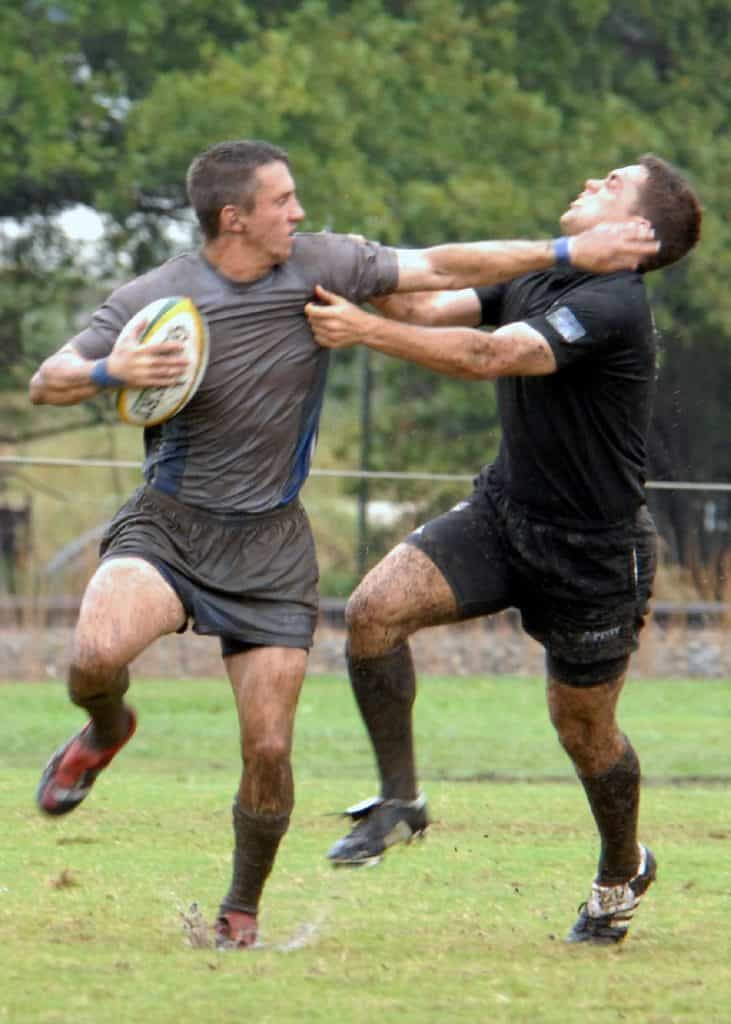
A recent study examined the effects of a single OMT session on mean arterial pressure, heart rate (HR), and heart rate variability (HRV) in rugby players (Carnevali et al. 2021).
During physical exertion, such as training, the autonomic nervous system (ANS) must simultaneously manage many demands of the body. The working muscles compete with the thermoregulatory need for adequate skin perfusion, the maintenance of stable blood pressure, and proper perfusion of internal organs (Michael et al. 2017). All of this is autonomously regulated beyond our awareness until training ends and cardiac autonomic recovery begins (Coote 2010). Complete recovery occurs when all stressed systems return to normal resting levels (Terziotti et al. 2001). Particularly high training intensities correlate with delayed recovery of heart rate and heart rate variability (Peçanha et al. 2014, Pecanha et al. 2013, Seiler et al. 2007, Terziotti et al. 2001). Additional psychological stress, such as that present during competition, further amplifies this effect (Barbero-Álvarez et al. 2012, Póvoas et al. 2012). Studies have found elevated HR and HRV values up to 24 hours after competition in athletes. Furthermore, orthostatic dysregulation of the ANS was observed in rugby players the day after a match (Edmonds et al. 2013). These altered resting and reactivity parameters in elite athletes with incomplete cardiac autonomic recovery carry potentially harmful health consequences and lead to diminished performance in training and competition.
Osteopathic manipulative treatment influences the work of the autonomic nervous system by contributing to simultaneous vasodilation, smooth muscle relaxation, and increased blood flow. Studies have also shown that OMT leads to an increase in resting heart rate variability and counteracts stress-induced decreases in HRV (Fornari et al. 2017, Giles et al. 2013, Henley et al. 2008). Thus, OMT is capable of promoting cardiac autonomic homeostasis.
If you are interested in the exact data:
Methods:
The present study employed a randomized, double-blind, sham-controlled crossover design and conducted resting and reactivity measurements (blood pressure, heart rate, heart rate variability). A total of 23 male rugby players participated in the study. Each player was tested four times under two different conditions (after a match vs. no match). Participants were randomly assigned to either OMT or sham treatment.
Results:
18 to 20 hours after a match, increases in blood pressure and heart rate were observed, as well as decreased HRV compared to a day without training.
The single OMT session resulted in a significant increase in HRV and a significant reduction in blood pressure, independent of athletic exertion.
Thus, this study demonstrates a clear benefit of a single OMT session for elite athletes with respect to cardiovascular autonomic parameters.
Literature
Barbero-Álvarez J, Boullosa DA, Nakamura FY, et al. Physical and physiological demands of field and assistant soccer referees during America’s cup. J Strength Cond Res. 2012;26(5):1383-1388
Carnevali L, Cerritelli F, Guolo F, et al. Osteopathic Manipulative Treatment and Cardiovascular Autonomic Parameters in Rugby Players: A Randomized, Sham-Controlled Trial. J Manipulative Physiol Ther. 2021;44(4):319-329
Coote JH. Recovery of heart rate following intense dynamic exercise. Exp Physiol. 2010;95(3):431-440
Edmonds RC, Sinclair WH, Leicht AS. Effect of a training week on heart rate variability in elite youth rugby league players. Int J Sports Med. 2013;34(12):1087-1092
Fornari M, Carnevali L, Sgoifo A. Single osteopathic manipulative therapy session dampens acute autonomic and neuroendocrine responses to mental stress in healthy male participants. J Osteopath Med. 2017;117(9):559-567
Giles PD, Hensel KL, Pacchia CF, et al. Suboccipital decompression enhances heart rate variability indices of cardiac control in healthy subjects. J Altern Complement Med. 2013;19(2):92-96
Henley CE, Ivins D, Mills M, et al. Osteopathic manipulative treatment and its relationship to autonomic nervous system activity as demonstrated by heart rate variability: a repeated measures study. Osteopath Med Prim Care. 2008;2(1):1-8
Michael S, Graham KS, Davis GM. Cardiac autonomic responses during exercise and post-exercise recovery using heart rate variability and systolic time intervals—a review. Front Physiol. 2017;8:301
Peçanha T, Prodel E, Bartels R, et al. 24-h cardiac autonomic profile after exercise in sedentary subjects. Int J Sports Med. 2014;35(03):245-252
Pecanha T, Paula-Ribeiro M de, Nasario-Junior O, et al. Post-exercise heart rate variability recovery: a time-frequency analysis. Acta Cardiol. 2013;68(6):607-613
Póvoas SCA, Seabra AFT, Ascensão AAMR, et al. Physical and physiological demands of elite team handball. J Strength Cond Res. 2012;26(12):3365-3375
Seiler S, Haugen O, Kuffel E, Autonomic recovery after exercise in trained athletes: intensity and duration effects. Med Sci Sport Exerc. 2007;39(8):1366-1373
Terziotti P, Schena F, Gulli G, et al. Post-exercise recovery of autonomic cardiovascular control: a study by spectrum and cross-spectrum analysis in humans. Eur J Appl Physiol. 2001;84(3):187-194