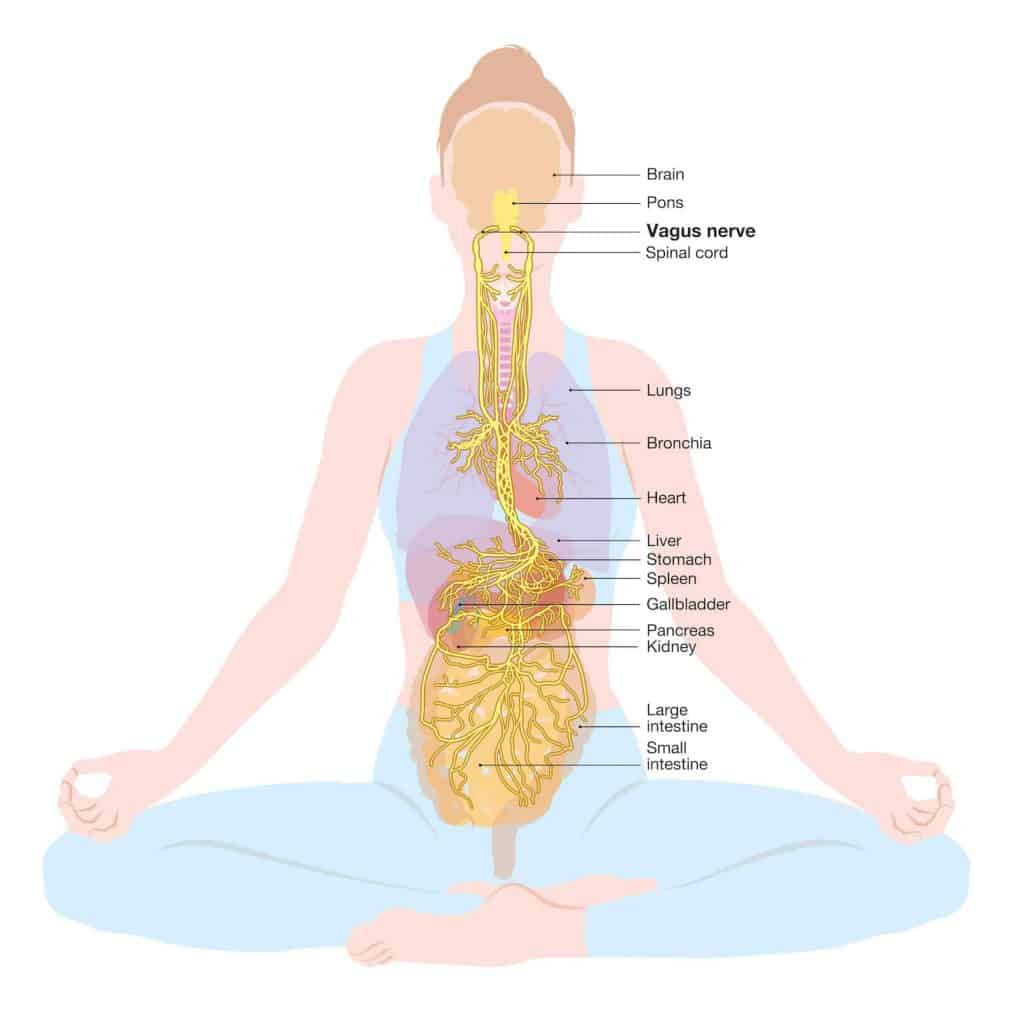
Rapid, shallow breathing, muscle tension, elevated blood pressure: such typical stress reactions are involuntary, yet the organism can learn to regulate them. Studies support this; they also show that the vagus nerve plays an important role in this process. The techniques and measures mentioned here can help activate the vagus nerve and dampen overreactions of the sympathetic nervous system:
- Deep and slowed breathing
with or without HRV (heart rate variability) feedback.[615] HRV refers to the heart’s ability to respond to different stress situations by changing its beat frequency.[616] Smartphone apps and wearables (portable body function monitoring devices, e.g., in sports watches) can measure HRV and provide guidance on breath regulation through biofeedback.
- Breathing and cleansing techniques
from yoga.[617]
- Autogenic training[618],
yoga[619] and tai chi.[620]
- Meditation[621];
one example: The traditional “loving-kindness meditation,” which aims to strengthen positive feelings toward oneself and others, apparently activates the vagus nerve and thereby indirectly triggers relaxation responses, such as a decrease in blood pressure. These effects were measurable in test subjects who actually experienced more joy in life and connection with others after meditation.[622] It is assumed that activation of the vagus nerve also occurs through deep breathing during meditation.[623]
- All measures that lead to an increase in oxytocin
(and vasopressin), such as massage and touch.[624]
- Singing, humming, mantra chanting:
Singing increases HRV in healthy 18-year-old women and men. However, this has only been investigated in a single study to date. Humming, hymn and energetic singing, as well as mantra chanting are said to increase HRV in slightly different ways.[625] Chanting the mantra “Om” also activates the vagus. The authors suggest that this may occur through stimulation of its branches in the ears.[626] Both mantra and prayer recitations in breathing rhythm resulted in an increase in existing cardiovascular rhythms and HRV as well as a decrease in blood pressure in a study of 23 adults.[627] Singing is also said to trigger the release of oxytocin.[628]
- Laughter:
In a pilot study on laughter yoga, participants showed immediate improvement in mood and increased HRV.[629]
- Harmonious togetherness,
especially between parents and children, measurably activates the vagus nerve and thereby indirectly promotes relaxation and regeneration.[630]
- Cold showers
and other cold applications apparently cause the vagus nerve to activate neurons. This in turn results in increased parasympathetic activity[631], especially when cold stimuli are applied over an extended period. The organism then apparently learns this response and automatically recalls it when exposed to cold stimuli.[632]
- Probiotics,
such as Lactobacillus rhamnosus, resulted in a reduction of stress hormones as well as depressive and anxiety behavior under the influence of the vagus nerve.[633] Anxiety behavior was also dampened with Bifidobacterium longum through the vagus nerve.[634]
- Omega-3 fatty acids
(particularly abundant in fatty fish).[635]
- Choline,
- e.g., in eggs or poultry, can improve damage to the cardiovascular system with the involvement of the vagus nerve.[636]
- Light to moderate physical exercise
stimulates gastric emptying through increased vagus nerve activity.[637]
- Massage,
for example, foot massage.[638] In premature infants, massage can support weight gain through stimulation of the vagus nerve.[639]
- Carotid sinus massage
on the sides of the neck can even suppress epileptic seizures.[640] This type of massage should only be performed by qualified therapeutic professionals.
- Ear stimulation
(by professionals or devices manufactured for laypersons: electrical, possibly also by pressing fingers or small seeds in the cochlea) also stimulates the vagus nerve.[641]
- Fasting[642]:
In animal experiments, intermittent fasting as well as calorie-reduced food intake led to a decrease in a marker for sympathetic activity and an increase in a marker for parasympathetic activity[643].
- Sleeping on the right side:
In a study of the effects of lying positions on autonomic nerve modulation in patients with coronary heart disease, it was found that vagal activity was highest and sympathetic arousal was lowest in the right lateral position.[644]
- Electromagnetic fields:
Exposure to pulsed electromagnetic fields for 20 minutes led to faster recovery of heart rate variability, especially in the very low frequency range after physical exertion. After the magnetic field exposure was terminated, the described effects quickly diminished.[645]
- The peptide GLP
also indirectly activates the vagus nerve, so that stress reactions are dampened.[646] If endogenous GLP-1 secretion is stimulated through diet, this effect is enhanced. High-fiber foods, nuts, avocados, and eggs increase GLP levels. This could also be a promising strategy for the treatment of obesity and type 2 diabetes.[647] It may not be particularly surprising that sleep disorders, physical inactivity, alcohol consumption, pro-inflammatory diet, and smoking are listed as essential lifestyle factors.From Liem T. Tsolodimos C. Das Osteopathie-Selbsthilfe-Buch: Wie Osteopathie wirkt und die Selbstheilung fördert. Mit Übungen für jeden Tag. 2021. Trias, Stuttgart. Amazon Bestseller for 5 Months More about the book